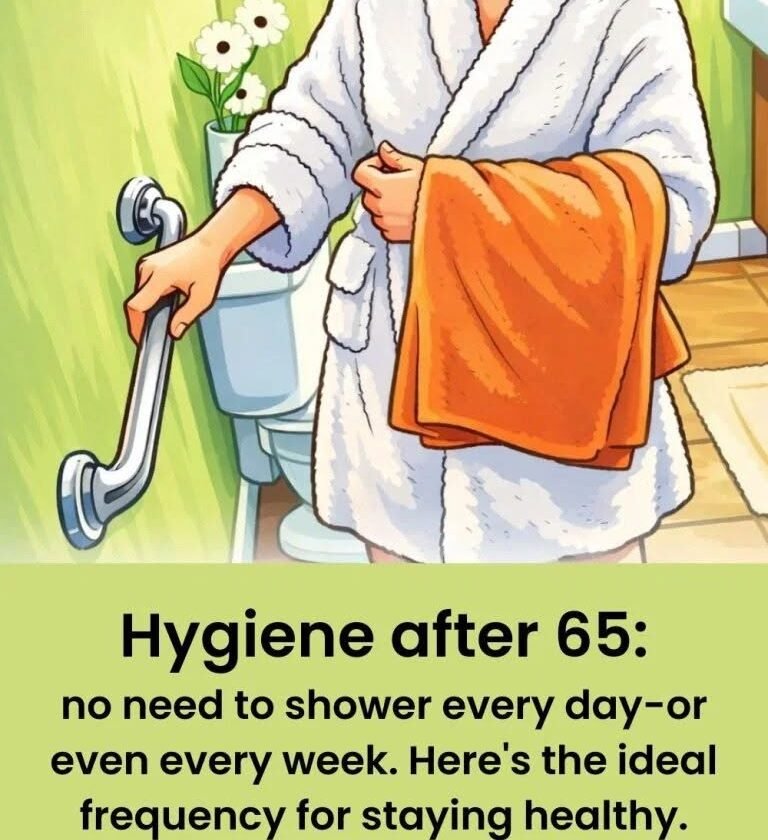
🚿 Why Daily Showers After 65 May Sometimes Do More Harm Than Good
The claim that everyone over 65 should avoid daily showers is misleading. There is no universal age at which daily bathing becomes harmful. The real issue is that aging skin is often more prone to dryness and irritation, and long, hot showers can make that worse.
5 things to watch for
- Dry, itchy skin
Older skin tends to produce less natural oil. Frequent hot showers can strip those oils and worsen dryness. - Skin-barrier irritation
Harsh soaps, fragrances, and vigorous scrubbing can damage the skin’s protective barrier, leading to redness and irritation. - Very hot water can cause dizziness
Heat can widen blood vessels and temporarily lower blood pressure. This may be particularly risky for someone already prone to dizziness or falls. - The bathroom can be a fall hazard
Wet floors, slippery tubs, and getting in or out of the shower can increase fall risk. Grab bars, nonslip mats, good lighting, and a shower seat can improve safety. - Overwashing isn’t necessary
Depending on activity, sweating, climate, skin condition, and personal preference, some people don’t need a full-body wash every day.
🧴 A gentler routine
If daily showers leave the skin dry, try short, lukewarm showers, use a mild fragrance-free cleanser mainly where needed, and apply a moisturizer shortly after bathing.
There’s no magic “correct” number of showers per week after 65. Personal hygiene needs vary considerably.
If an older adult develops persistent itching, a rash, sores, severe dryness, or recurrent skin infections, a doctor or dermatologist can help identify the cause rather than simply reducing bathing.
And if someone becomes dizzy, faint, confused, or unusually weak in the shower, that shouldn’t be dismissed as normal aging—it warrants medical attention.