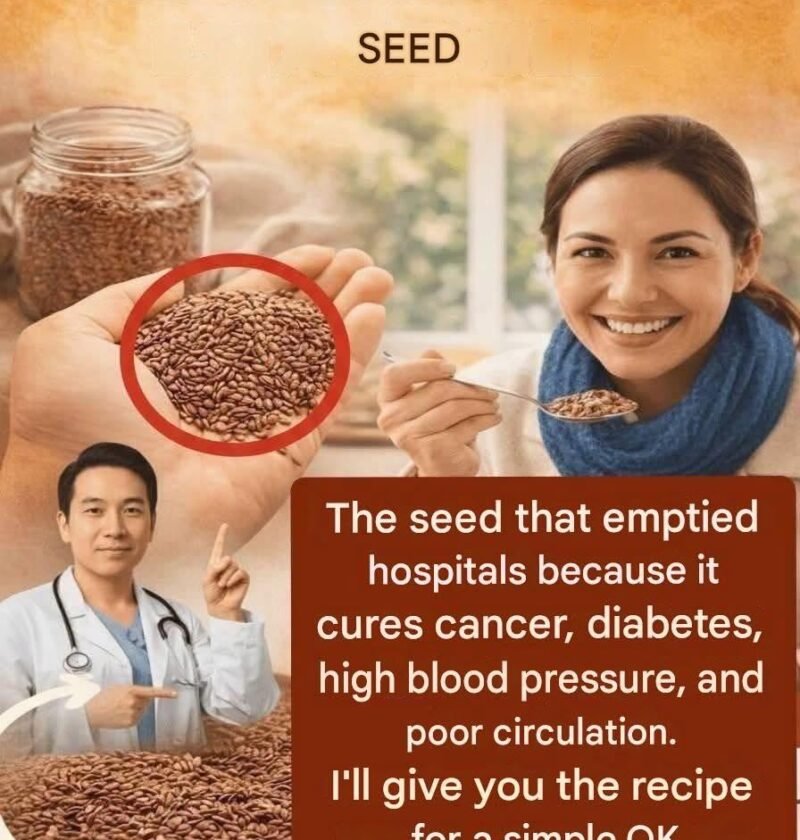
If you want a detailed, medically responsible explanation of the claim “These seeds destroy even the deadliest disease,” the key point is that the claim is far stronger than the evidence supports.
What these seeds can actually do
Several seeds are highly nutritious and may support overall health:
- Flaxseeds — rich in alpha-linolenic acid (ALA), fiber, and lignans. Regular consumption may help support heart health and cholesterol levels.
- Chia seeds — provide fiber, ALA omega-3 fats, protein, calcium, and other minerals. Their fiber can contribute to better satiety and digestive health.
- Pumpkin seeds — a source of protein, magnesium, zinc, and unsaturated fats.
- Sunflower seeds — provide vitamin E, healthy fats, magnesium, and other nutrients.
- Sesame seeds — contain healthy fats, protein, minerals, and lignans.
- Hemp seeds — provide protein and unsaturated fats, including ALA.
- Ground linseed (flaxseed) — particularly useful when ground because its nutrients and fiber are easier to access than from whole seeds.
Can they destroy cancer or another serious disease?
No. There is no good evidence that eating a particular seed can destroy cancer, heart disease, diabetes, or another potentially fatal disease. Some compounds found in seeds have shown interesting effects in laboratory or animal research, but that doesn’t mean eating the food treats disease in humans.
A healthy diet can reduce certain disease risks and support treatment and recovery, but it shouldn’t replace prescribed medication, surgery, chemotherapy, radiation, or other evidence-based treatment.
A better way to use the claim
If you’re creating health content, a credible version would be:
“7 Powerful Seeds Worth Adding to Your Diet—And What Science Actually Says About Them”
This keeps the interesting nutritional angle without promising a cure that hasn’t been demonstrated.