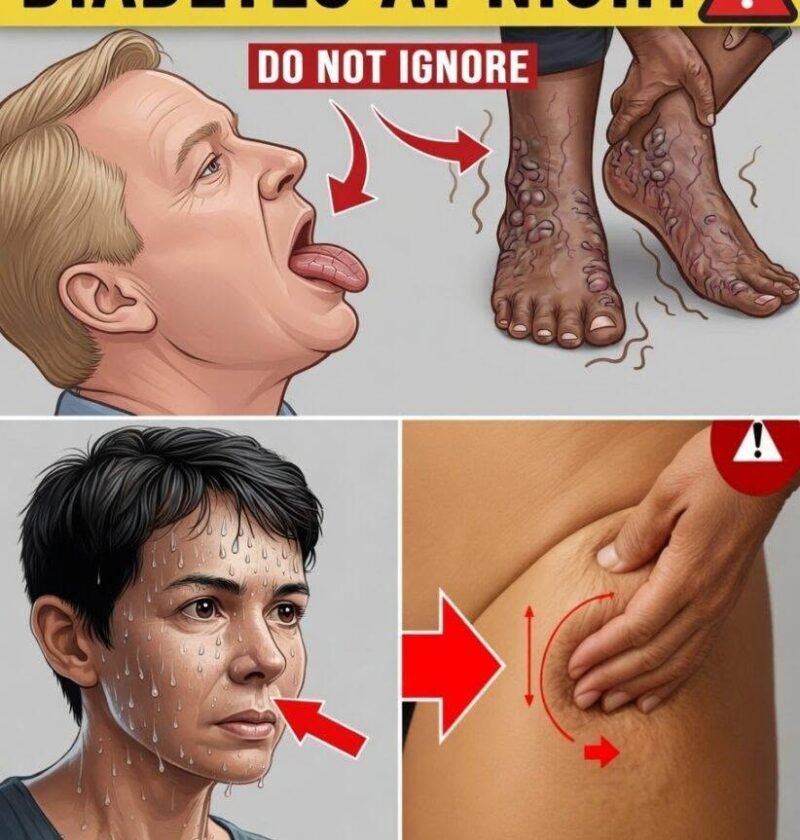
7 nighttime symptoms that can be associated with diabetes
A viral headline can make these symptoms sound more specific than they really are. Nighttime symptoms alone cannot diagnose diabetes, and several have many other possible causes.
-
Frequent nighttime urination — high blood glucose can cause the kidneys to excrete more glucose and water, increasing urine production.
-
Increased thirst — greater fluid loss through urination can leave you unusually thirsty.
-
Night sweats — particularly important for people using insulin or certain glucose-lowering medicines, because sweating can occur during hypoglycemia (low blood sugar).
-
Hunger during the night — can occur with low blood glucose, although there are many other possible causes.
-
Tingling, burning, or pain in the feet — diabetes-related nerve damage can produce symptoms that become more noticeable at night.
-
Dry or itchy skin — diabetes can contribute to dry skin, though itching has many other causes.
-
Poor or interrupted sleep — repeated urination, thirst, neuropathy, or episodes of abnormal blood glucose can interfere with sleep