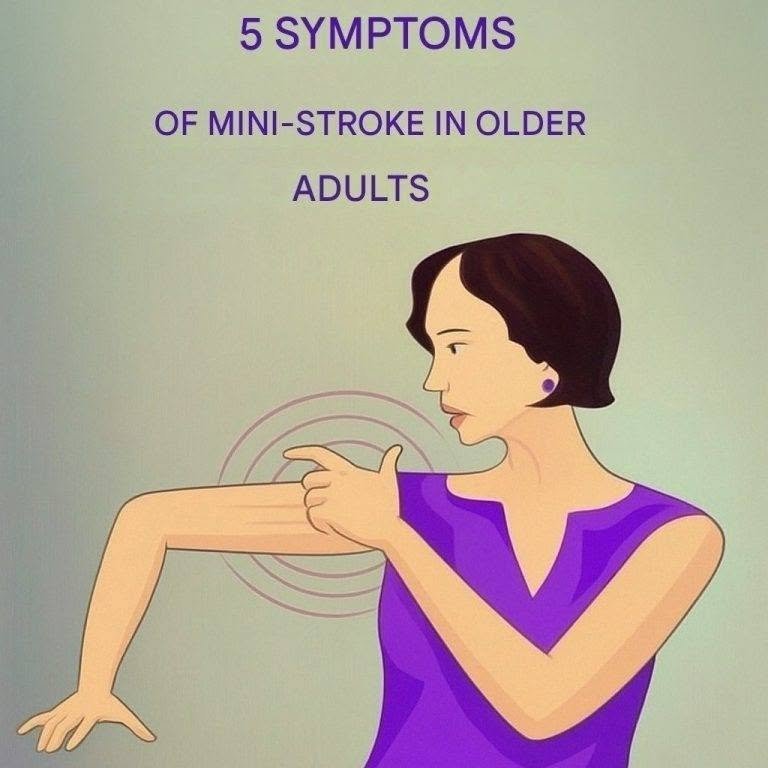
A mini-stroke—medically known as a Transient Ischemic Attack (TIA)—occurs when blood flow to a part of the brain is temporarily blocked. Unlike a major stroke, the blockage is brief, and symptoms typically resolve within minutes to a few hours without causing permanent damage.
However, a TIA is a critical medical emergency and a major warning sign. Up to a third of people who have a TIA will eventually have a full stroke, with the highest risk occurring within the first few days. Recognizing the signs early can literally save a life.
The 5 Key Symptoms of a Mini-Stroke
In older adults, symptoms can sometimes be dismissed as “just getting older” or fatigue. Watch out for the classic FAST warning signs, along with other sudden neurological changes:
-
Sudden Facial Droop or Numbness
-
What it looks like: One side of the face may droop or feel completely numb. When the person tries to smile, the smile is uneven.
-
Older adult trap: Can be easily confused with a sudden dental issue, a reaction to medication, or Bell’s palsy, but any sudden onset requires immediate medical evaluation.
-
-
Arm or Leg Weakness (Usually on One Side)
-
What it looks like: Sudden weakness, numbness, or paralysis in an arm, a leg, or both on the exact same side of the body. The person might suddenly drop objects or struggle to lift a limb.
-
Older adult trap: Often written off as arthritis flair-ups, general muscle fatigue, or joint stiffness.
-
-
Slurred Speech or Difficulty Finding Words
-
What it looks like: Speech may become slurred, garbled, or hard to understand. The person might struggle to form coherent sentences or completely fail to understand what others are saying.
-
Older adult trap: Mistaken for confusion, fatigue, or the onset of dementia/senior moments.
-
-
Sudden Vision Changes in One or Both Eyes
-
What it looksLike: Sudden blurring, double vision, blacking out of vision, or partial loss of sight in one or both eyes.
-
Older adult trap: Dismissed as failing eyesight, cataracts, or tired eyes.
-
-
Sudden, Severe Dizziness or Loss of Balance
-
What it looks like: A sudden, overwhelming loss of balance, unsteadiness, or severe dizziness accompanied by trouble walking or coordinating movements.
-
Older adult trap: Frequently attributed to vertigo, inner ear issues, low blood pressure, or a simple trip/stumble.
-
What to Do Immediately
If you suspect an older adult is experiencing a mini-stroke—even if the symptoms disappear entirely after just a few minutes—call emergency services (like 911) immediately.
-
Do not wait to see if symptoms pass. There is no way to tell the difference between a TIA and a full stroke while symptoms are happening.
-
Note the exact time symptoms first appeared. This information is vital for emergency medical teams when considering acute treatments