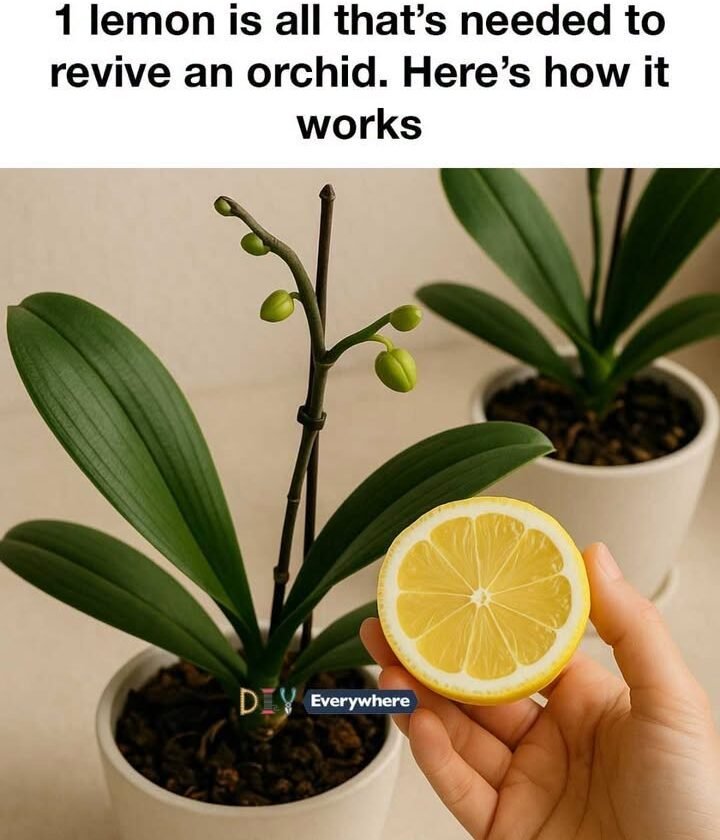
…another classic horticultural magic trick promising a miraculous plant resuscitation from a single piece of fruit!
When a headline claims that “1 lemon is all that’s needed to revive an orchid,” you are stepping straight into the world of viral gardening myth-making. The internet loves to take ordinary pantry items, attach them to a dramatic before-and-after photo, and present them as a secret “hack” that big nurseries don’t want you to know.
Let’s strip away the citrusy hype and look at what actually happens if you try to use a lemon on a struggling orchid, and what the plant actually needs to bounce back:
🍋 Why the “Lemon Hack” Is a Bad Idea
Articles or videos pushing this trick usually suggest rubbing lemon juice on the leaves, squeezing it into the potting medium, or soaking the roots in citrus water to “cleanse,” “fertilize,” or “cure” a dying orchid.
Here is why that backfires:
-
Severe Chemical Burns: Lemon juice is intensely acidic (packed with citric acid). If you apply pure or concentrated lemon juice directly to orchid leaves or roots, it will drop the pH dramatically and cause chemical burns, killing the delicate green tissue.
-
Attracting Pests: Leaving sticky, sugary citrus juice anywhere near your plant is a universal dinner bell for fungus gnats, fruit flies, and ants.
-
Root Shock: Orchids (specifically popular ones like Phalaenopsis) are epiphytes that grow on trees in tropical rainforests; they hate having their roots subjected to harsh, acidic fruit juices that disrupt their delicate balance.
🌸 What Is Actually Wrong with Your Orchid?
If your orchid is looking droopy, yellow, or “dying,” it’s usually suffering from one of three very boring, easily fixable mechanical issues:
-
Rotting Roots (The #1 Killer): People often plant orchids in regular garden soil or keep them sitting in standing water in the bottom of a decorative pot. Orchid roots need massive airflow and coarse bark. If they stay waterlogged, they suffocate and turn mushy and brown.
-
Too Much Direct Sun: Leaving an orchid in a blazing, direct south-facing window will literally sunburn its flat leaves, turning them yellow or white with scorched brown spots. They prefer bright, indirect light.
-
The “Ice Cube” Myth Backfire: Many commercial tags suggest watering orchids with ice cubes. For tropical plants native to warm rainforests, dropping freezing cold water directly on their roots can cause temperature shock, stunting their growth or causing buds to drop.
🌿 How to Actually Revive a Struggling Orchid
If you want to save a sad orchid, skip the fruit bowl and follow these steps:
-
Inspect the Roots: Gently take the orchid out of its pot. Use clean scissors to snip away any dead, mushy, brown, or papery roots. Leave the firm, plump, silvery-green or white roots alone.
-
Repot in Fresh Bark: Replant it in a specialized, chunky orchid mix (mostly pine bark and perlite) inside a clear plastic pot with plenty of drainage holes.
-
Water Correctly: Instead of ice cubes or random tricks, give the pot a thorough soak under room-temperature running water when the roots inside the clear pot look silvery-gray, and let all the excess water drain out completely before putting it back. When the roots turn green, it’s hydrated and happy.
The Bottom Line: Save your lemons for your tea or your salad. If your orchid needs reviving, it wants better airflow, proper drainage, and the right watering habits—not a squeeze of citrus.
Did this lemon miracle trick pop up on your social media feed today?