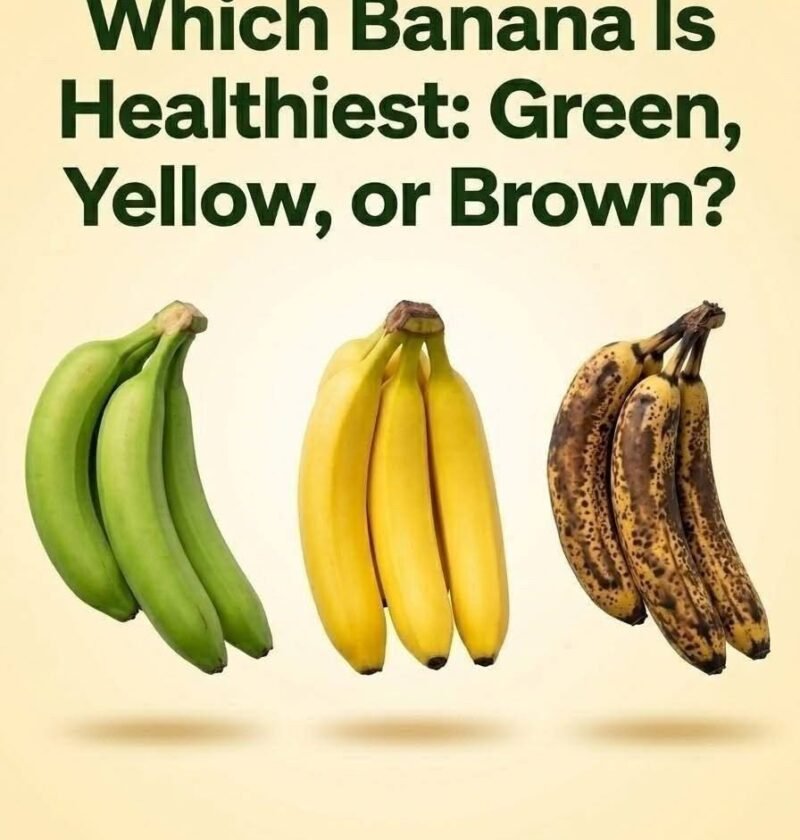
Which Banana Is Actually the Healthiest? 🍌
There isn’t one banana variety that’s dramatically healthier than all the others. Ripeness matters more than color or appearance, particularly if you’re paying attention to blood sugar and fiber.
🟢 Slightly green banana
Often the better choice if you’re looking for less rapidly available carbohydrate.
- Contains more resistant starch, which behaves somewhat like fiber.
- May produce a smaller blood-glucose rise than a very ripe banana.
- Can support gut bacteria.
- Less sweet and sometimes harder to digest.
🟡 Yellow banana
A good all-around choice.
- Easier to digest than a green banana.
- Provides potassium, vitamin B6, vitamin C, and fiber.
- Naturally sweet without added sugar.
🟤 Very ripe banana
Still nutritious—but sweeter.
- Resistant starch decreases as the banana ripens and converts into simpler sugars.
- Softer and generally easier to digest.
- Useful for smoothies, oatmeal, or baking.
What about the tiny or red varieties?
Red bananas and small banana varieties can also be excellent choices. Their nutrient differences from ordinary yellow bananas are generally much less important than your overall diet.
🏆 The practical winner
For most people, a normally ripe yellow banana is an excellent everyday fruit. If you’re specifically trying to minimize the blood-glucose response, a firm, slightly green banana may be preferable.
And despite claims you may see online, bananas don’t “clog arteries,” cause diabetes by themselves, or need to be avoided simply because you’re older. Portion size and your overall diet matter much more.