When people notice an increase in ear hair—especially as they grow older—it often sparks curiosity about what it means for their overall health. While viral wellness posts occasionally spin dramatic tales about physical traits, medical reality points to a mix of genetics, normal aging, and a few surprising clinical correlations.
What Ear Hair Actually Is
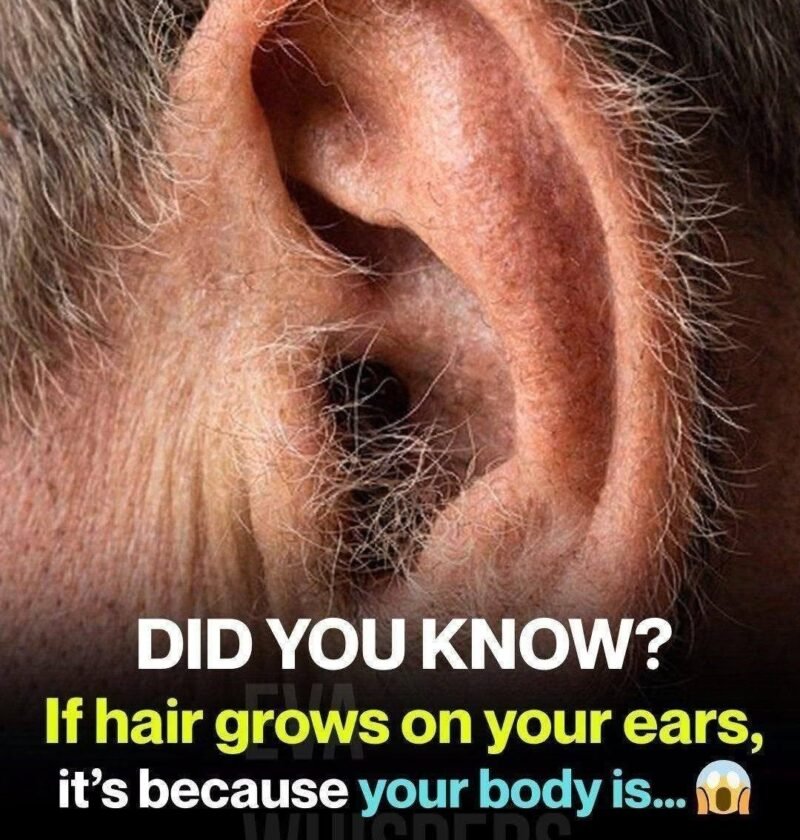
Everybody has fine, peach-fuzz-like hair (vellus hair) covering much of their body, including the outer ears. However, as people age—particularly men—hormonal shifts and follicle changes can cause these fine hairs to turn into thicker, coarser strands (terminal hairs) around the outer ear and canal. Its primary job is entirely practical: working alongside earwax to trap dust, debris, and bacteria before they reach your eardrum.
The Surprising Medical Links: What Researchers Have Explored
-
The Cardiovascular Connection (Coronary Artery Disease)
-
What the studies say: Over the decades, medical literature has occasionally highlighted a statistical correlation between heavy ear-canal hair (hypertrichosis kanalis auris) and an increased risk of coronary artery disease, particularly in younger men.
-
The medical consensus: Cardiologists emphasize that ear hair itself does not cause heart trouble. Instead, researchers suggest that shared metabolic factors, aging pathways, or long-term hormonal sensitivities (such as high androgen activity) may link the two. If accompanied by other markers—like a diagonal crease across the earlobe (known as Frank’s sign)—some doctors view it as a soft clinical clue to keep a closer eye on standard heart health risk factors like blood pressure and cholesterol, rather than a standalone diagnostic tool.
-
-
Hormones and Aging
-
As men and women age, shifting hormone balances (including changes in testosterone sensitivity) can alter hair growth patterns across the body. While more noticeable hair sprouting from the ears or eyebrows is a standard part of getting older, a sudden, dramatic explosion of coarse hair growth in multiple unusual areas can occasionally point toward underlying endocrine or metabolic shifts.
-
-
Local Ear Health and Comfort
-
Excessively dense hair right inside the ear canal doesn’t usually signal an internal disease, but it can occasionally cause localized issues. It can trap earwax, cause a tickling or scratching sensation, or make it slightly easier for moisture to get trapped, potentially raising the risk of irritation or outer-ear discomfort.
-
The Bottom Line
For the vast majority of people, noticing a few wiry hairs on or inside the ears is a completely harmless, normal part of the aging process. While medical researchers have found intriguing statistical correlations with cardiovascular health in specific demographics, it is never a definitive sign of illness on its own.
Are you noticing new changes in hair growth or looking into routine ways to safely manage and groom ear hair?