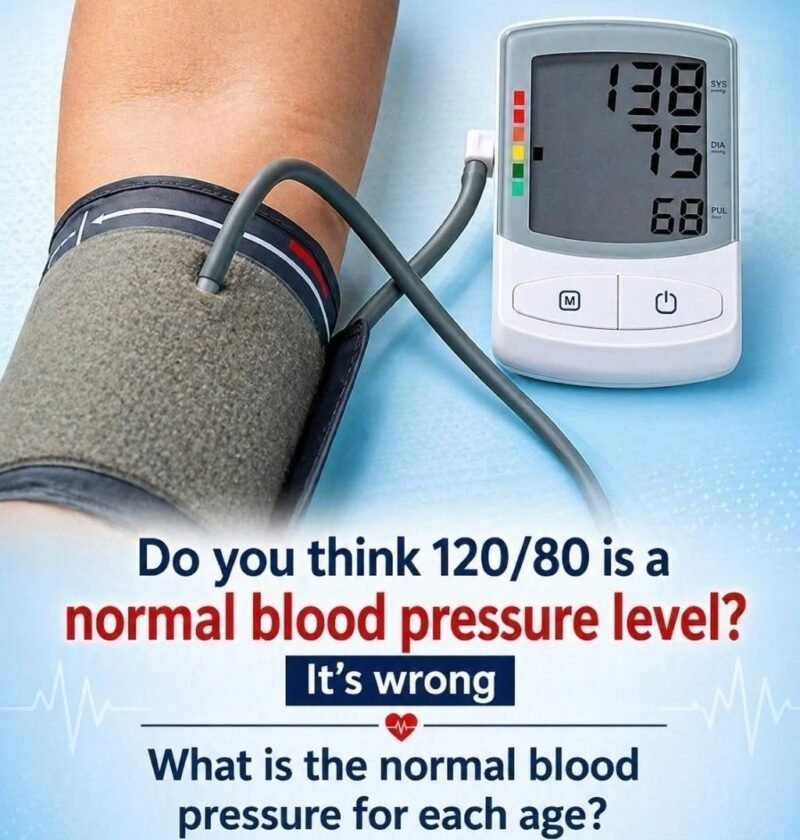
There isn’t one exact “normal” blood-pressure number for every age. For adults, blood-pressure categories are generally the same across age groups, although an individual’s treatment target can differ.
Adult blood pressure guide
| Category | Systolic (top) | Diastolic (bottom) |
|---|---|---|
| Normal | <120 mmHg | <80 mmHg |
| Elevated | 120–129 | <80 |
| High — Stage 1 | 130–139 | 80–89 |
| High — Stage 2 | ≥140 | ≥90 |
| Severely high | ≥180 | and/or ≥120 |
A single high reading doesn’t necessarily mean you have hypertension. Blood pressure should generally be measured correctly and confirmed with repeated readings.
Does age change what’s normal?
-
Adults 18+: The categories above are commonly used; being older doesn’t automatically make 150/90 “normal.”
-
Children and teenagers: Normal ranges depend on age, sex, and height, so adult numbers shouldn’t be used.
-
Older adults: Doctors may individualize treatment targets depending on overall health, other illnesses, medications, and risk of dizziness or falls.
Important: A reading of 180/120 mmHg or higher warrants immediate attention, particularly if accompanied by chest pain, shortness of breath, weakness/numbness, confusion, severe headache, or vision changes.
If you tell me the person’s age and blood-pressure reading, I can explain what it means.