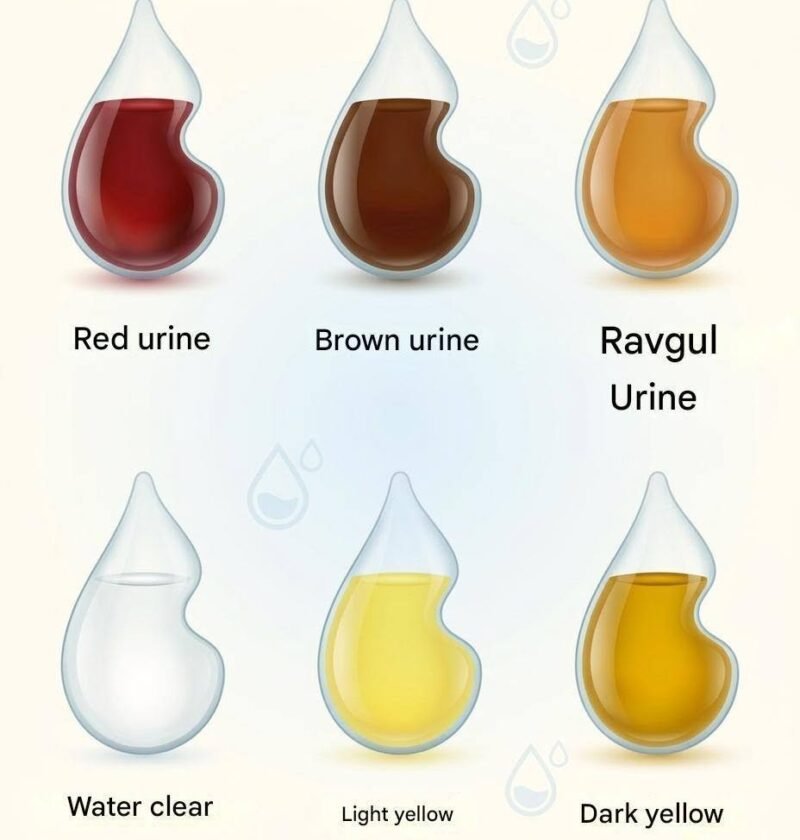
The color of your urine is one of the easiest, most accessible health indicators your body provides. While it changes mostly based on how hydrated you are, it can also give you clues about your diet, medications, or underlying medical conditions.
Here is a guide to what different urine colors mean for your health:
1. Clear to Pale Straw (Hydrated)
-
What it looks like: Transparent or the color of light, pale straw.
-
What it means: This is the ideal range. It indicates that you are well-hydrated and your body is maintaining a healthy balance of fluids. (Note: If your urine is completely crystal clear all the time, it might mean you are actually drinking more water than your body needs, though it’s generally harmless).
2. Transparent Yellow to Dark Amber (Dehydration Spectrum)
-
What it looks like: Ranging from a standard sunny yellow to a deep honey or amber color.
-
What it means: As you get progressively darker, it’s a sign that your urine is becoming more concentrated.
-
Standard Yellow: Normal, but your body is starting to look for more water.
-
Dark Amber/Honey: You are likely dehydrated. Your kidneys are holding onto water to keep your body functioning, making your waste more concentrated. Time to drink a glass of water!
-
3. Pink, Red, or Brownish-Red (Dietary or Blood)
-
What it looks like: Ranging from a pale pink tint to deep red or cola-colored.
-
What it means:
-
Harmless Causes: Did you recently eat beets, blackberries, or rhubarb? Certain foods can temporarily turn your urine pink or red.
-
Medications: Some laxatives or antibiotics can also cause reddish hues.
-
Medical Warning: Blood in the urine (hematuria). This can be caused by urinary tract infections (UTIs), kidney stones, enlarged prostates, or, more seriously, diseases of the kidney or bladder. If you haven’t eaten red-pigmented foods and see red urine, consult a doctor.
-
4. Orange (Medications or Dehydration)
-
What it looks like: Bright neon orange or a deeper brownish-orange.
-
What it means:
-
Severe dehydration can sometimes concentrate urine enough to make it look orange.
-
More commonly, it is caused by certain medications (such as the tuberculosis drug rifampin or the urinary tract pain reliever phenazopyridine) or high doses of B-complex vitamins (especially vitamin B2/riboflavin).
-
It can also occasionally point to liver or bile duct issues, especially if your stools also appear pale.
-
5. Blue or Green (Rare and Unusual)
-
What it looks like: A surprising blue, teal, or greenish hue.
-
What it means: This is almost always harmless and usually caused by:
-
Food dyes in things you ate or drank.
-
Certain medications or medical dyes used in diagnostic tests.
-
In very rare cases, a genetic metabolic condition (like familial hypercalcemia or “blue diaper syndrome”) or a specific type of bacterial urinary tract infection.
-
6. Dark Brown or “Cola-Colored”
-
What it looks like: Deep brown, resembling soda or strong tea.
-
What it means:
-
Severe dehydration can cause this.
-
If you drink plenty of water and it stays dark, it can indicate liver disease (such as hepatitis or cirrhosis), as a buildup of bilirubin spills into the urine.
-
It can also result from extreme muscle breakdown (rhabdomyolysis) caused by severe injury or overexertion.
-
7. Cloudy or Murky
-
What it looks like: Hazy, milky, or opaque instead of transparent.
-
What it means: This is a classic sign of a urinary tract infection (UTI), where white blood cells, bacteria, or pus are present in the urine. It can also be caused by kidney stones, mineral crystals (like phosphates), or dehydration.
When to See a Doctor
Occasional shifts in color due to food, vitamins, or hydration are completely normal. However, you should contact a healthcare professional if:
-
Your urine is red, pink, or cola-colored and you haven’t eaten anything that would explain it.
-
Your urine is dark brown, cloudy, or foul-smelling, and the discoloration persists for more than a day or two.
-
The change in color is accompanied by other symptoms like pain, burning during urination, fever, lower back pain, or frequent urges to go.