Vinegar is often hailed as a magical natural laundry booster, promising to banish dingy stains, soften stiff fabrics, and eliminate stubborn odors without harsh chemicals. However, because vinegar is an acid, dumping it into the wrong cycle or mixing it with incompatible products can actually damage your clothes or ruin your washing machine.
Here is why vinegar works wonders for your laundry, the common mistakes people make, and the right way to use it for whiter whites and softer towels.
Why Vinegar Works in Laundry
White distilled vinegar (typically 5% acidity) contains acetic acid, which offers several natural laundry benefits:
-
Natural Fabric Softener: It breaks down detergent residue trapped in clothing fibers—which is often what makes towels feel stiff and scratchy.
-
Odor Neutralizer: It neutralizes alkaline odors (like sweat, mildew, and smoke) rather than just masking them with synthetic fragrances.
-
Brightener & Whitener: The mild acid helps dissolve mineral buildup (from hard water) and detergent film that causes whites to look yellow or gray.
-
Static Guard: It helps reduce static cling naturally without dryer sheets.
The Most Common Mistakes People Make
-
The Mistake: Pouring vinegar directly onto dry clothes.
-
Why it’s wrong: Because vinegar is acidic, pouring it straight onto fabric can weaken or bleach certain textiles if it sits undiluted.
-
-
The Mistake: Mixing vinegar and chlorine bleach in the same load.
-
Why it’s dangerous: Mixing an acid (vinegar) with a chlorine bleach creates toxic chlorine gas, which is a serious health hazard.
-
-
The Mistake: Adding vinegar to the wash cycle with detergent.
-
Why it’s inefficient: Vinegar is an acid, and laundry detergents are typically alkaline. If you put them in together, they neutralize each other, rendering both the detergent and the vinegar less effective.
-
-
The Mistake: Pouring vinegar on rubber washing machine parts constantly.
-
Why it’s a risk: While great for cleaning the machine periodically, using large amounts of vinegar in every single wash cycle can slowly degrade rubber hoses, seals, and gaskets over time.
-
The Right Way to Use Vinegar in Your Laundry
To get all the benefits safely, timing and placement are everything:
-
For Softer Towels and Static Reduction:
-
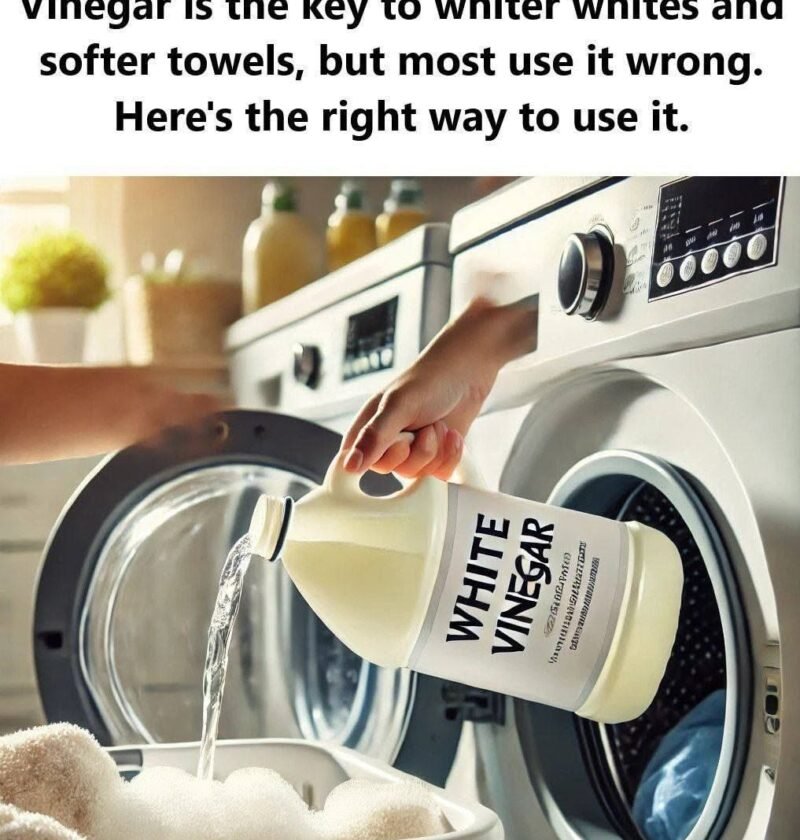
Where to put it: Pour 1/2 cup of white distilled vinegar directly into your washing machine’s fabric softener dispenser.
-
When it works: The machine will automatically release the vinegar during the final rinse cycle. By then, the detergent has already washed away, allowing the vinegar to strip away residue and soften the fibers completely.
-
-
For Brighter Whites:
-
Where to put it: Add 1/2 to 1 cup of white vinegar to the rinse cycle, or pre-soak dingy whites in a basin of warm water mixed with 1 cup of vinegar for 30 minutes before washing normally.
-
-
For Eliminating Mildew or Pet Odors:
-
Add 1 cup of vinegar directly to the drum during the wash cycle for heavy-duty odor loads (like musty towels or workout gear), but make sure to use a detergent-free pre-soak or let it run through the rinse cycle properly.
-
[!NOTE] A Quick Word on Scent: Don’t worry—your clothes won’t smell like a salad dressing! The sharp vinegar aroma completely evaporates as the fabrics dry, leaving behind only clean, neutral-smelling laundry