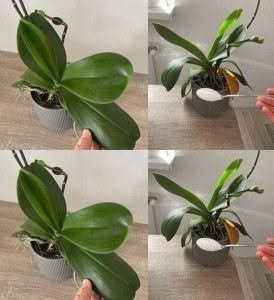
Viral videos and gardening hacks claiming that a single tablespoon of honey will make your orchids “bloom non-stop” are everywhere online, but treating your plants with straight kitchen honey can do more harm than good.
While honey has legitimate, mild uses in traditional plant propagation (such as acting as a natural sticking agent or offering trace antimicrobial properties in very diluted rooting mixtures), pouring a tablespoon of pure or heavily concentrated honey onto an orchid pot is a recipe for disaster.
Why the “Honey Trick” Backfires on Orchids
-
Sugar Overload and Bacterial Rot: Honey is packed with sugars (fructose and glucose). Dumping sticky sugar into an orchid’s root medium (like bark or sphagnum moss) introduces a massive food source for bacteria and fungi. Instead of feeding the plant, it triggers rapid microbial and mold growth that can rot the delicate root system.
-
Attracting Pests: That same sticky sweetness acts as an immediate beacon for ants, fungus gnats, mealybugs, and other destructive pests looking for an easy meal.
-
Osmotic Shock (Dehydration): Pouring a thick, viscous substance like honey onto roots can create an unbalanced osmotic environment, drawing moisture out of the plant’s tissues and burning or dehydrating the roots rather than nourishing them.
What Actually Makes Orchids Bloom Non-Stop?
Orchids do not respond to “miracle” kitchen fixes. Continuous, healthy blooming comes down to mimicking their natural tropical tree-dwelling environment:
-
The Right Light: Most indoor orchids (like Phalaenopsis) need bright, indirect light. If they aren’t blooming, insufficient light is almost always the culprit.
-
Temperature Drops: Many orchids initiate a flower spike in response to a natural temperature shift—specifically, experiencing nights that are about 10 to 15 degrees cooler than their days for a few weeks.
-
The “Weakly, Weekly” Rule: Instead of heavy, random doses of home remedies, professional orchid growers feed plants a balanced, water-soluble fertilizer diluted to quarter-strength almost every time they water during the growing season.