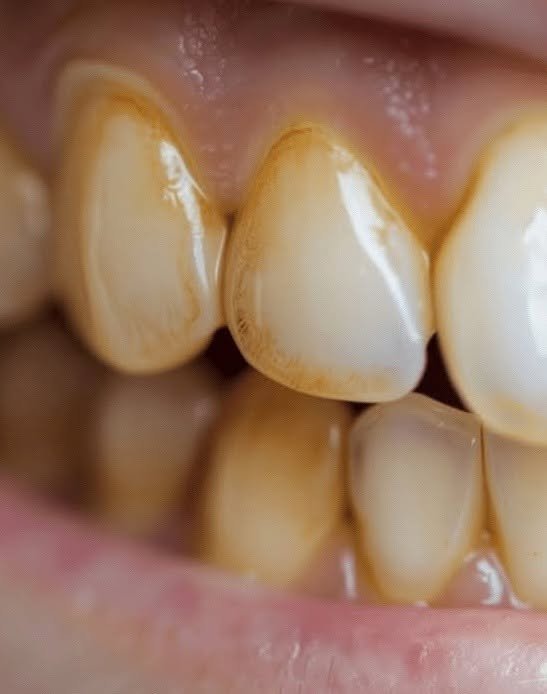
While internet hacks and viral DIY remedies frequently claim that kitchen ingredients like baking soda, lemon juice, or apple cider vinegar can strip away hard tartar and instantly whiten teeth at home, dentists urge extreme caution.
Tartar (calculus)—which is hardened plaque that has calcified on your teeth—cannot actually be scraped or dissolved away at home once it forms; trying to do so with metal tools or harsh abrasives usually damages your gums and enamel. Furthermore, while certain natural substances can help manage soft plaque or surface stains, aggressive home methods often cause permanent, irreversible harm.
The Hidden Dangers of Popular DIY “Tartar and Whitening” Hacks
-
Lemon Juice and Apple Cider Vinegar: Often recommended for whitening or “dissolving” buildup, these acids have a very low pH. Rinsing or brushing with them chemically etches away your protective tooth enamel. Once enamel is gone, it never grows back, exposing the yellowish dentin underneath and making your teeth drastically more prone to cavities and extreme sensitivity.
-
Baking Soda and Hydrogen Peroxide: While baking soda has a mild abrasive property that can lift surface stains if used very gently, scrubbing with it daily—especially when combined with hydrogen peroxide—can wear down enamel and severely irritate or chemically burn your gum tissue.
-
DIY Dental Pick Scraping: Using metal pins, needles, or improvised tools to chip away at hardened tartar risks slicing your gums, introducing bacteria into your bloodstream, and gouging the root surfaces of your teeth.
Safe, Evidence-Based Ways to Support Oral Health at Home
While you cannot remove hardened tartar without professional dental instruments, you can effectively stop new plaque from calcifying into tartar and gently manage surface staining using safe, dentist-approved habits:
-
Master the 2×2 Routine: Brush twice a day for a full two minutes using a soft-bristled toothbrush (or an electric toothbrush, which is clinically proven to remove significantly more plaque). Angle the bristles at 45 degrees toward your gumline.
-
Daily Interdental Cleaning: Flossing or using water flossers is non-negotiable. Plaque hardens into tartar in as little as 24 to 72 hours in the spaces where your toothbrush bristles cannot reach.
-
Oil Pulling (As a Complement, Not a Replacement): Swishing coconut oil for 5 to 10 minutes (oil pulling) has traditional roots and some modern support for reducing oral bacteria and soft plaque, provided it is done alongside standard brushing and flossing, not instead of them.
-
Hydration and Saliva Control: Saliva is your mouth’s natural defense mechanism; it washes away food particles and neutralizes acids. Drinking plenty of water and avoiding excessive mouth-drying habits helps keep plaque soft and easier to brush away.
The Bottom Line
Professional dental cleanings (scaling and root planing) use specialized ultrasonic and manual instruments designed to shatter and remove tartar safely without scratching your enamel. Relying on professional care twice a year combined with meticulous daily hygiene is the only safe way to keep your teeth genuinely clean and white.