The phrase “Note that if you always sleep on your right side, you should have…” is another classic teaser designed to spark instant curiosity about hidden health risks or posture rules.
When wellness articles use this hook, they are usually referring to a well-known physiological quirk regarding digestion and acid reflux.
Here is what anatomy teaches us about side sleeping, why your choice of side matters, and what you actually need to keep in mind.
The Anatomy of Right-Side vs. Left-Side Sleeping
Your internal organs are not symmetrically arranged, which means gravity affects your body differently depending on which side you lie on:
-
The Stomach and Acid Reflux:
-
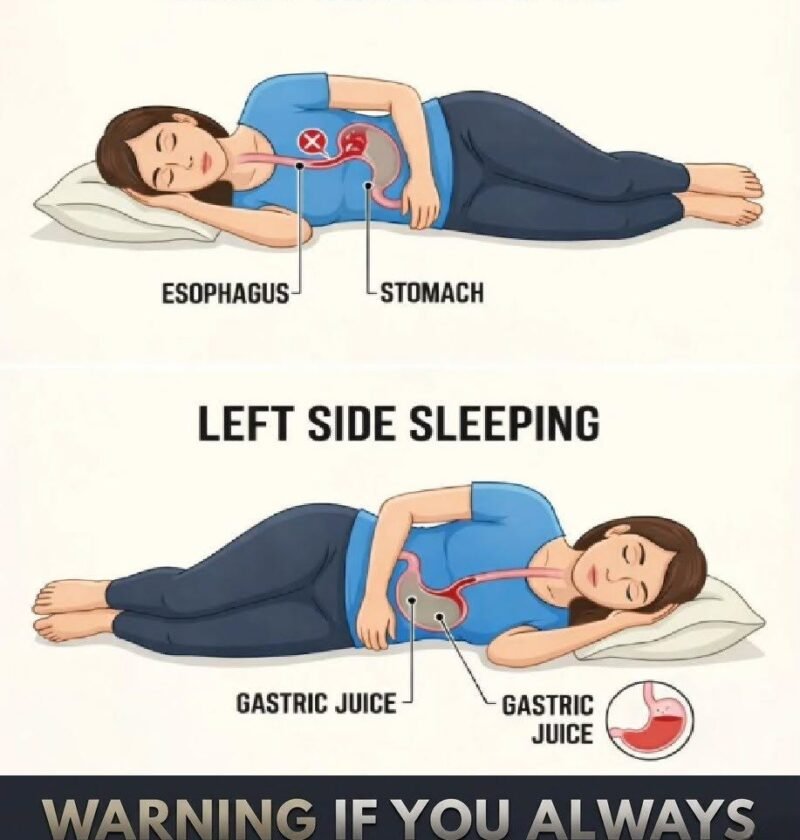
Why right-side sleeping can trigger issues: Your stomach sits on the left side of your abdominal cavity, and the junction where your esophagus connects to your stomach (the lower esophageal sphincter) sits slightly below the level of gastric acid when you lie on your right side. Gravity makes it much easier for stomach acid to slip upward into the esophagus, provoking nighttime heartburn or GERD symptoms.
-
Why left-side sleeping is preferred for digestion: Gravity works in your favor on the left side, keeping the gastric junction higher than the level of digestive acids, which naturally reduces acid reflux episodes.
-
-
Circulation and Heart Strain:
-
The major blood vessel returning blood from your lower body to your heart (the inferior vena cava) runs slightly to the right side of your spine. Sleeping flat on your back or heavily skewed can sometimes place mild pressure on it, which is why pregnant women are specifically advised to sleep on their left side to optimize blood flow to the fetus.
-
Do You Need to Change How You Sleep?
Despite what sensational health headlines claim, if you wake up feeling well-rested, pain-free, and free of nighttime heartburn, you do not need to stress over your sleeping position. Millions of people naturally shift positions throughout the night without issue.
However, if you experience frequent acid reflux, indigestion at night, or waking up with a sour taste in your mouth, making a few simple adjustments can bring relief:
-
Try Shifting Left: Experiment with rolling onto your left side for a few nights, especially if you’ve eaten a heavier dinner.
-
Elevate Your Upper Body: Instead of just stacking extra pillows under your head (which can bend your neck awkwardly), use a wedge pillow or elevate the head of your bed slightly to let gravity keep stomach acids where they belong.
-
Mind Your Meal Timing: Avoid eating large, heavy, or high-fat meals within two to three hours of lying down to sleep.