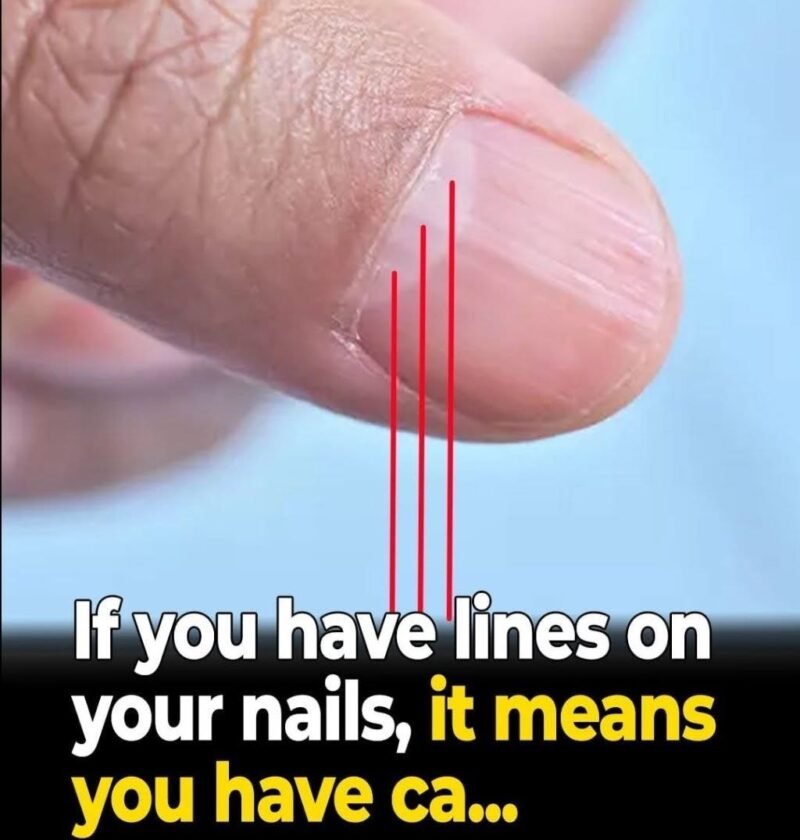
The hook “Doctor uncovers a telltale sign in your fingernails that may predict your life expectancy” is a classic piece of viral health clickbait designed to make everyone immediately look down at their hands with anxiety.
While it sounds like sensationalized internet myth-making, there is a small kernel of medical truth buried beneath the headline: your fingernails can indeed act as a diagnostic mirror for your internal systemic health. However, they don’t magically predict your exact lifespan; rather, sudden changes in nail color, shape, or texture can be outward warning signs of underlying chronic conditions—such as cardiovascular disease, nutrient deficiencies, or respiratory issues—that deserve medical attention.
What Your Fingernails Can (and Can’t) Tell You
Your nails grow from the matrix beneath your cuticle, relying on a rich supply of tiny blood vessels and optimal nutrient delivery. When internal systems struggle, nail growth can be altered.
1. Clubbing (Curved, Enlarged Fingertips)
-
What it looks like: The tips of your fingers broaden and swell, and the nails curve downward noticeably, resembling an upside-down spoon.
-
What it may indicate: This is one of the most clinically significant nail signs. Nail clubbing is frequently linked to chronic low blood-oxygen levels, which can be associated with long-term pulmonary conditions (like COPD or pulmonary fibrosis) or certain cardiovascular diseases.
2. Terry’s Nails (Whitened Nails with a Dark Band)
-
What it looks like: Most of the fingernail appears stark white, looking like ground glass, except for a narrow reddish-brown band at the very tip.
-
What it may indicate: It can sometimes appear naturally with aging, but persistent Terry’s nails can be a physical clue pointing toward underlying liver dysfunction, congestive heart failure, or type 2 diabetes.
3. Spoon-Shaped Nails (Koilonychia)
-
What it looks like: The nails become thin, fragile, and concave, curving upward at the edges so much that they could theoretically hold a drop of water.
-
What it may indicate: This is a classic visual sign of severe iron-deficiency anemia, where the body lacks the red blood cells needed to supply adequate oxygen throughout the tissues.
4. Splinter Hemorrhages (Tiny Vertical Red Lines)
-
What it looks like: Tiny, dark reddish-brown vertical lines running underneath the nail, looking like small splinters trapped under the glass.
-
What it may indicate: While they often result from minor physical trauma or bumping your finger, persistent or unexplained splinter hemorrhages can occasionally signal inflammation of the heart valves (infective endocarditis) or small blood vessel vasculitis.
The Reality Check
Viral articles love to frame these signs as fortune-telling secrets to scare readers. In medical reality, a nail change is simply a biomarker—a quiet whisper from your body signaling that routine blood work, a physical checkup, or a conversation with your physician is warranted.
Healthy aging isn’t about deciphering dramatic internet predictions; it’s about paying attention to subtle body changes and keeping up with regular preventative care.