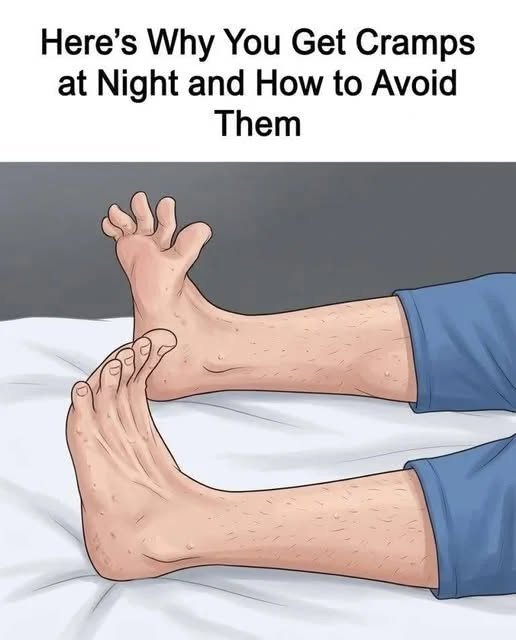
Waking up in the middle of the night with a muscle spasm so intense it feels like your calf muscle is tearing is an excruciating experience. Nocturnal leg cramps usually target the calf muscles or the arches of the feet, leaving lingering soreness well into the next day.
While they are often harmless, understanding what triggers them is the key to stopping them.
7 Common Causes of Nighttime Leg Cramps
-
Muscle Fatigue and Overuse: Standing for long hours, heavy workouts, or unusual physical strain without proper stretching can leave muscle fibers primed to spasm as they relax into sleep.
-
Electrolyte Depletion (Magnesium, Potassium, Calcium): These minerals govern how your nerves signal your muscles to contract and relax. Low levels—often caused by poor diet, intense sweating, or dehydration—lead to misfiring nerves and prolonged cramps.
-
Dehydration: When your body lacks adequate fluid volume, blood circulation to your muscles decreases, and electrolyte concentrations in the tissue shift, making muscle fibers hyper-irritable.
-
Prolonged Sitting or Inactivity: Sitting at a desk or in bed all day without moving your ankles and calves can cause muscles to shorten and blood flow to slow down, triggering sudden cramps once you finally stretch out in bed.
-
Nerve Compression (Peripheral Neuropathy): Conditions like spinal stenosis or mild nerve impingement in the lower back can send erratic signals down to your leg muscles at night.
-
Medication Side Effects: Certain prescription drugs—most notably diuretics (water pills) used for high blood pressure—can rapidly flush out crucial electrolytes like potassium and magnesium, setting the stage for nighttime cramps.
-
Poor Footwear or Flat Feet: Wearing unsupportive shoes or lack of arch support forces the small muscles in your feet and lower legs to overcompensate during the day, resulting in spasms at rest.
How to Stop Them Instantly (When a Cramp Strikes)
-
The Immediate Stretch: Do not fight the muscle by curling your toes. Instead, force your foot upward (dorsiflexion)—pulling your toes back toward your shins—and straighten your leg. If standing is possible, gently leaning your weight onto the cramped leg with a slightly bent knee can also help.
-
Gentle Massage or Heat: Rubbing the muscle firmly or applying a warm heating pad helps relax the tight fibers.
Natural Strategies to Prevent Them
-
Hydrate Consistently: Drink water throughout the day, not just right before bed (which will only force midnight bathroom trips).
-
Pre-Bed Calf Stretch: Spend 2 minutes doing a standard wall stretch for your calves right before you brush your teeth. Lengthening the muscle before sleep drastically reduces overnight spasms.
-
Magnesium Glycinate: If dietary intake is low, taking a bioavailable magnesium supplement (like magnesium glycinate) in the evening helps relax muscle tissue and calm nerve excitability. (Remember to check with a doctor if you take other medications).