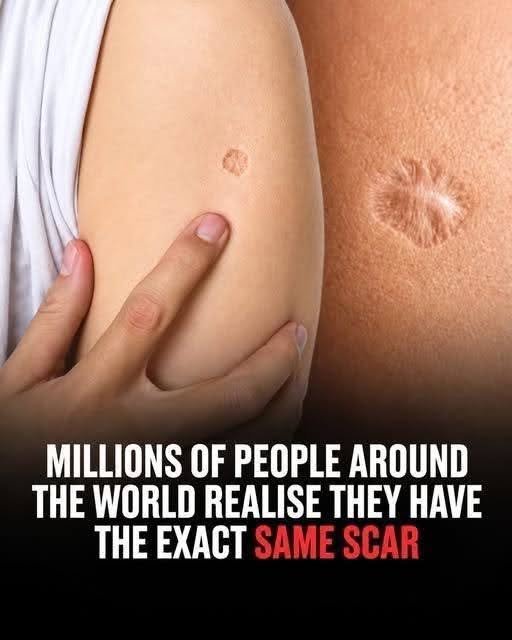
Viral internet articles love to tease a mysterious “small scar on the arm” that millions of people share, acting as if it’s a hidden riddle. In reality, the answer is remarkably straightforward and rooted in global public health history.
What Is the Scar?
That small, circular, slightly raised or indented scar on the upper arm (usually the right shoulder or upper arm) is almost universally the mark left by the BCG (Bacille Calmette-Guérin) vaccine.
-
What it protects against: The BCG vaccine is primarily given to prevent tuberculosis (TB), a serious bacterial infection that mainly attacks the lungs. While it is rarely administered routinely in countries like the United States (where TB rates are very low), it is part of the standard childhood immunization schedule in dozens of countries across Europe, Asia, Africa, and South America where TB is more prevalent.
-
Why it leaves a scar: Unlike shots given with a standard needle, the traditional BCG vaccine was administered via an intradermal injection (just under the top layer of skin) or a multi-puncture tool. This often triggers a small localized blister, mild ulceration, or a small sore as the immune system responds, which naturally heals into a distinct, permanent circular scar.
Other Common Arm Scars
If you or someone you know has an arm scar but didn’t receive the BCG vaccine, it usually points to one of a few other routine sources:
-
Older Smallpox Vaccination (Scarification): Older generations worldwide often carry a larger, pitted circular scar on their upper arm from the smallpox vaccine before the disease was eradicated globally in 1980.
-
Surgical or Injury Scars: Simple childhood mishaps, stitches from sports injuries, or past mole removals are also very common culprits for unexplained marks on the limbs.