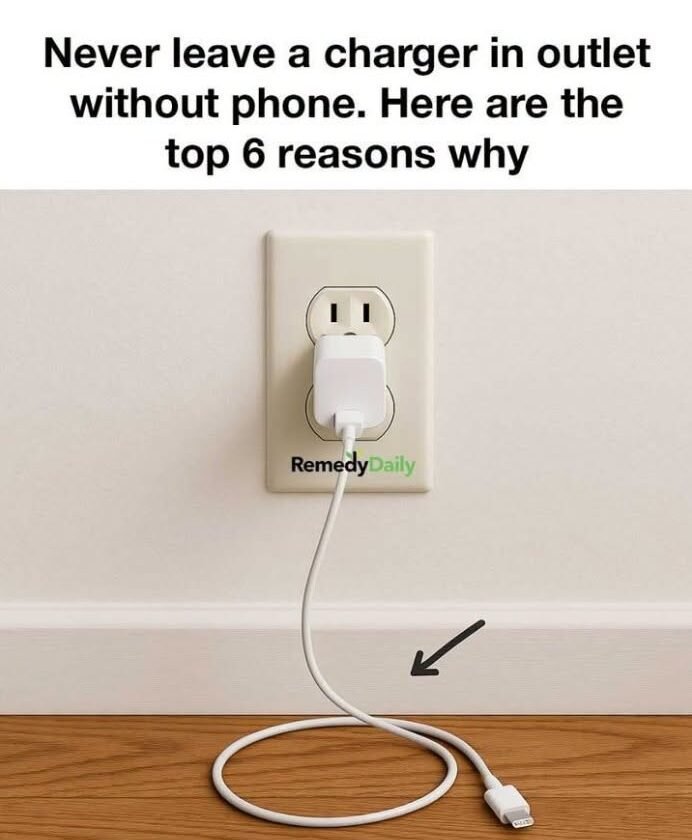
Should you unplug a charger when no phone is connected?
The advice “never leave a charger plugged in” is more cautious than necessary for a modern, undamaged charger, but unplugging it does have some benefits.
6 reasons to unplug it
-
It still uses a little electricity
A charger that’s plugged in but not charging a phone can draw a small amount of standby power. Modern chargers generally use very little. -
It can reduce heat exposure
Chargers normally shouldn’t become hot when idle. Unplugging eliminates even the small amount of heat they may generate. -
Damaged chargers can be dangerous
Frayed cables, cracked housings, loose plugs, or counterfeit/poor-quality chargers can create electrical or fire hazards. -
Power surges can damage electronics
A charger left connected remains electrically connected to the mains and can potentially be affected by a surge. -
It prevents accidental damage
A plugged-in cable can be pulled, stepped on, or damaged, especially in busy areas or around children and pets. -
It removes an unnecessary electrical connection
If you aren’t using the charger, unplugging it is a simple precaution—particularly when leaving home for an extended period.
The bigger safety issue
Charger quality matters more than whether a good charger is left plugged in for a few hours. Use the manufacturer’s charger or a reputable, safety-certified replacement. Don’t use chargers with damaged cables or signs of overheating.
For everyday use, leaving a modern, reputable charger plugged in occasionally isn’t generally an emergency. But unplugging chargers when they’re not needed is a reasonable habit, especially before leaving home for a long time.