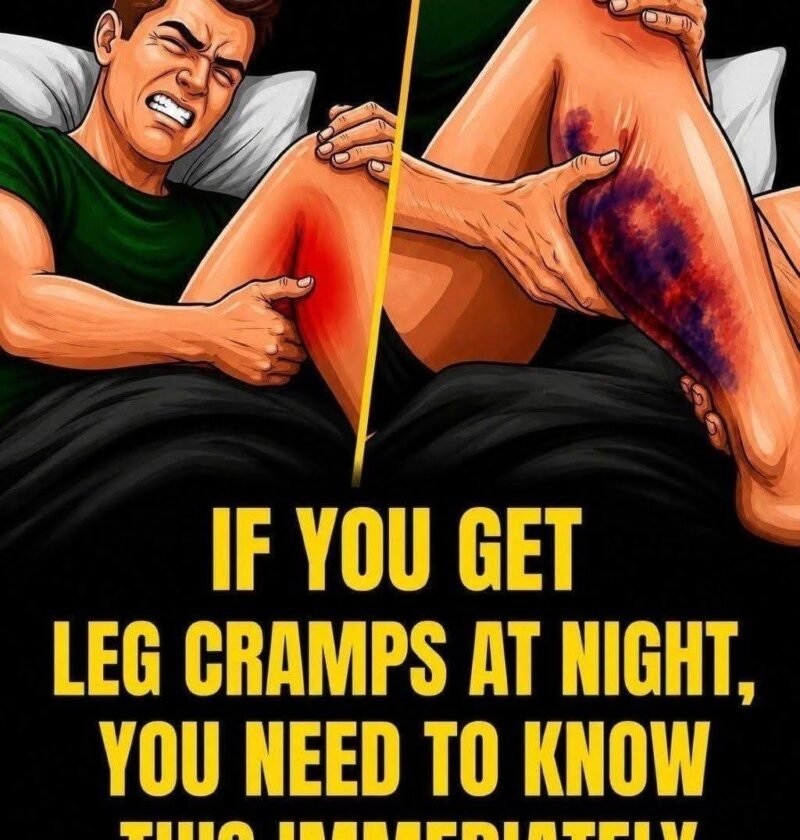
Don’t Ignore Leg Cramps at Night: What You Should Know
Nighttime leg cramps are sudden, painful tightening of a muscle—most commonly the calf—that can wake you from sleep. They’re common and often harmless, but frequent or severe cramps shouldn’t simply be ignored.
What to do when a cramp strikes
-
Stretch gently: Straighten the affected leg and slowly pull your toes toward your face.
-
Massage the muscle: Gently rub the cramped area until it relaxes.
-
Stand and walk carefully: Putting some weight on the leg can help release the contraction.
-
Use warmth: A warm shower or heating pad may help relax the muscle afterward.
Common reasons they happen
Night cramps can be associated with:
-
Muscle fatigue or prolonged physical activity
-
Sitting or standing in one position for long periods
-
Pregnancy
-
Dehydration in some people
-
Certain medications
-
Nerve or circulation problems
-
Some underlying medical conditions
Don’t automatically assume you need magnesium. Magnesium supplements don’t reliably prevent ordinary nighttime leg cramps in most older adults unless a deficiency or another specific condition is present.
How to reduce nighttime cramps
Try gentle calf and hamstring stretches before bed, maintain adequate fluid intake, and increase exercise gradually rather than suddenly. If cramps started after a new medication, ask your doctor or pharmacist whether the medicine could be contributing.
When to seek medical care
Make an appointment if cramps are frequent, becoming worse, disturbing your sleep, or accompanied by weakness, numbness, swelling, or persistent pain.
Get urgent medical attention if one leg suddenly becomes swollen, warm, red, and painful, especially if you also develop shortness of breath or chest pain.
Bottom line: An occasional nighttime leg cramp is usually not dangerous. Repeated cramps, however, can sometimes point to a medication issue or underlying condition and are worth discussing with a healthcare professional.