The headline “Doctors warn: If you often sleep on your right side…” is usually misleading when presented as a general health warning.
What sleeping on your right side can do
-
Heart: For most healthy people, sleeping on the right side does not damage the heart. The idea that right-side sleeping is generally dangerous for the heart is not supported as a blanket rule.
-
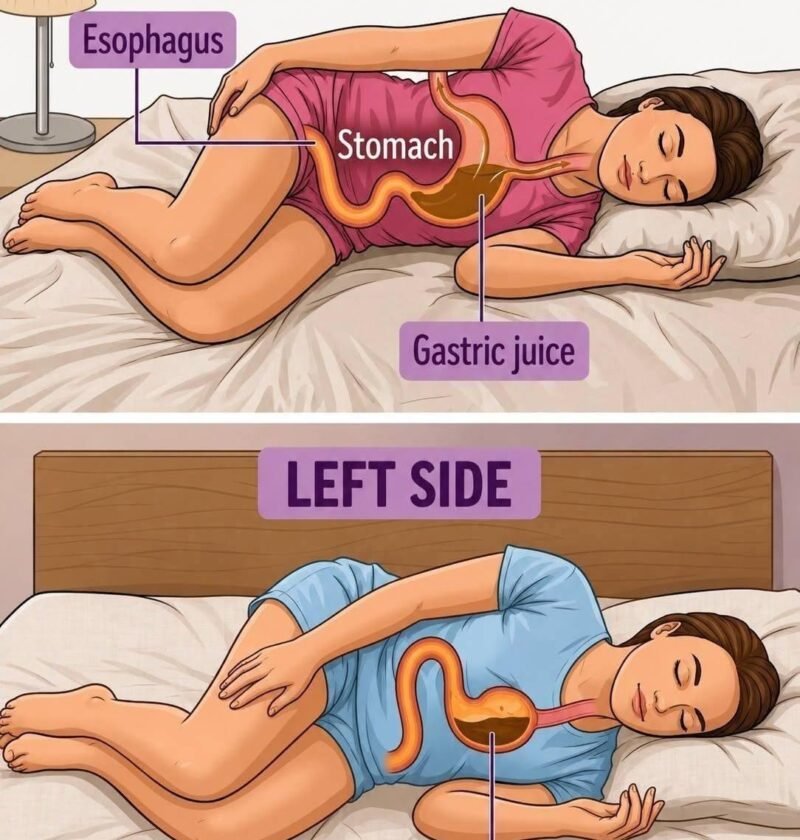
Acid reflux: This is one area where position can matter. Right-side sleeping can make reflux symptoms worse for some people, while left-side sleeping tends to reduce nighttime reflux.
-
Pregnancy: Side sleeping is commonly recommended later in pregnancy, but the advice is generally about side sleeping rather than a universal prohibition against the right side. Individual recommendations can differ.
-
Breathing and snoring: Side sleeping often helps keep the airway more open than sleeping flat on the back, potentially reducing snoring for some people.
-
Shoulder/neck discomfort: If your pillow or mattress doesn’t support you properly, sleeping on one side for long periods can contribute to shoulder, neck, or hip discomfort.
-
Digestion: Claims that right-side sleeping causes dangerous digestive problems are generally overstated. However, body position can influence how quickly the stomach empties and how reflux behaves.
What about the heart?
You may have heard that left-side sleeping is better for the heart because the heart is slightly left of the body’s midline. For most healthy people, this doesn’t mean that sleeping on the right side is harmful. In fact, some people with certain heart conditions may find right-side sleeping more comfortable.
When should you pay attention?
If sleeping on your right side consistently causes chest pain, significant shortness of breath, palpitations, severe reflux, or repeated nighttime awakening, that’s worth discussing with a doctor rather than simply changing your sleeping position.
Bottom line: There is no general medical rule saying “never sleep on your right side.” The best position depends on your symptoms and medical circumstances.