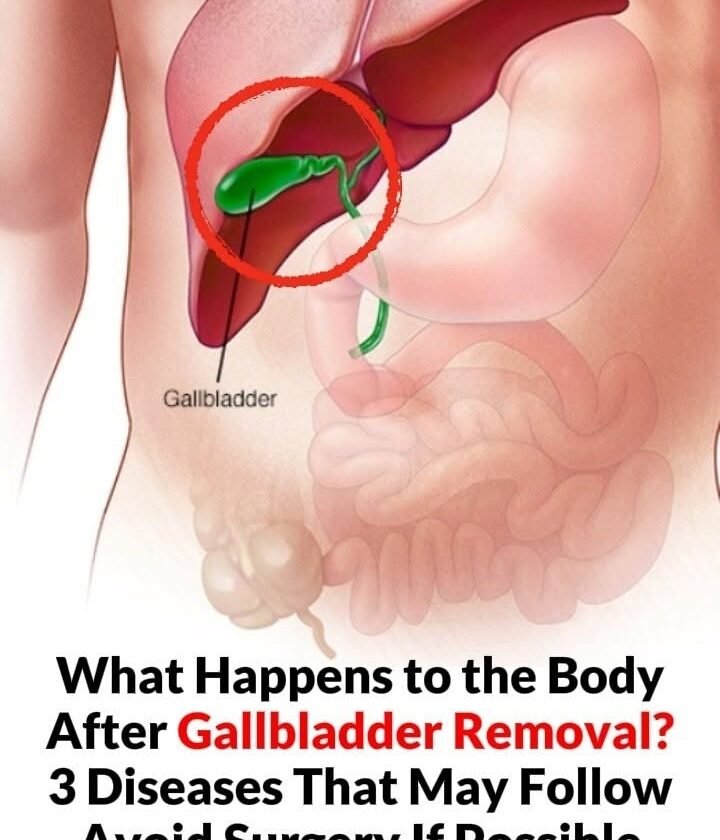
The headline “After gallbladder removal: 3 conditions you could develop—why you should avoid the surgery when possible” is misleading.
Gallbladder removal is not something everyone needs
If you have gallstones that cause no symptoms, surgery is often unnecessary. But if gallstones are causing repeated pain or complications, avoiding surgery can actually be more dangerous. Gallstones can lead to gallbladder inflammation, bile-duct blockage, jaundice, or pancreatitis. nhs.uk+1
What can happen after gallbladder removal?
Most people do well without a gallbladder, but some experience:
- Diarrhea or softer, more frequent stools — bile flows continuously into the intestine rather than being stored in the gallbladder. This is often temporary. NIDDK
- Indigestion, bloating, or abdominal discomfort — some people have persistent digestive symptoms after surgery, sometimes called post-cholecystectomy syndrome. nhs.uk
- Surgical complications — uncommon but potentially serious complications include bile leakage, infection, blood clots, or injury to the bile ducts or nearby organs. nhs.uk
So should you avoid the surgery?
Not if there’s a clear medical reason for it. For symptomatic gallstones, acute cholecystitis, recurrent biliary attacks, or certain complications, removing the gallbladder can prevent further potentially serious episodes. nhs.uk+1
And you can live normally without a gallbladder; your liver continues producing bile, and most people can eventually eat a normal diet. nhs.uk+1
If you’re considering gallbladder surgery, the important question isn’t simply “Is surgery dangerous?” but “Do my gallstones actually require surgery, and what are my risks if I don’t have it?”