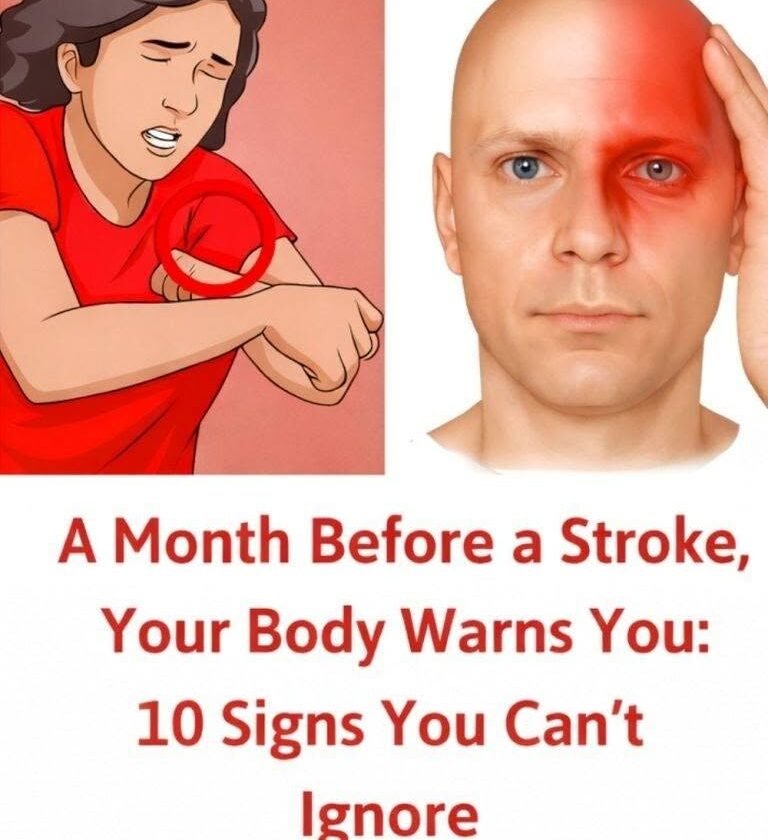
Experiencing a stroke is a medical emergency, and while strokes often feel sudden, research and clinical observations show that many people experience subtle or transient warning signs in the weeks, days, or hours leading up to a major event. These early signals occur when blood flow to the brain is temporarily or partially disrupted (sometimes called transient ischemic attacks or TIAs).
Recognizing these red flags early can save a life. Here are 10 important signs that should never be ignored:
1. Sudden, Severe Weakness or Numbness
-
What it feels like: A sudden loss of strength or a heavy, numb feeling, typically affecting only one side of the body. You might find it difficult to lift your arm, hold a cup, or notice your leg dragging when you walk.
2. Sudden Facial Droop or Asymmetry
-
What it feels like: Part of your face suddenly feels numb, stiff, or begins to sag. If you look in the mirror, one side of your mouth may droop when you try to smile.
3. Sudden Confusion, Trouble Speaking, or Slurred Words
-
What it feels like: Difficulty finding the right words, slurring your speech as if you are intoxicated, or suddenly struggling to understand what other people are saying to you.
4. Sudden Trouble Seeing in One or Both Eyes
-
What it feels like: A sudden darkening, blurring, double vision, or complete loss of sight in one or both eyes that comes on without warning.
5. Sudden, Severe Headache with No Known Cause
-
What it feels like: A “thunderclap” headache—an extremely intense, blinding headache that strikes out of nowhere, often described as the worst headache of your life, sometimes accompanied by dizziness, vomiting, or altered consciousness.
6. Sudden Loss of Balance, Coordination, or Dizziness
-
What it feels like: Feeling suddenly unsteady on your feet, stumbling, losing your balance, or experiencing severe vertigo (the room spinning) that makes it impossible to walk straight.
7. Sudden Trouble Walking or Loss of Fine Motor Skills
-
What it feels like: A sudden, inexplicable clumsiness. You might drop objects frequently, struggle to button your shirt, or find that your limbs simply won’t cooperate with your intentions.
8. Sudden Unexplained Fatigue or Lethargy
-
What it feels like: A profound, overwhelming exhaustion that sets in suddenly, making it hard to keep your eyes open or carry out basic daily tasks, even after a full night’s sleep.
9. Brief Episodes of Transient Ischemic Attacks (TIAs)
-
What it feels like: Also known as “mini-strokes,” these involve any of the symptoms above (like temporary slurred speech or arm weakness) that last for only a few minutes to an hour and then completely disappear. Never ignore a TIA—it is the strongest warning sign that a major stroke is likely to follow soon.
10. Sudden Changes in Mood, Personality, or Cognitive Function
-
What it feels like: Sudden, uncharacteristic irritability, confusion, agitation, or a feeling of disorientation that cannot be explained by stress or lack of sleep.
The FAST Test: What to Do in an Emergency
If you or someone around you experiences any of these symptoms—even if they go away after a few minutes—remember the FAST acronym to act immediately:
-
F – Face Drooping: Does one side of the face droop, or is it numb?
-
A – Arm Weakness: Is one arm weak or numb? Ask the person to raise both arms. Does one drift downward?
-
S – Speech Difficulty: Is speech slurred, are they unable to speak, or are they hard to understand?
-
T – Time to Call 911: If you observe any of these signs, call emergency services immediately. Do not wait to see if the symptoms pass. Quick medical intervention can drastically minimize permanent brain damage.