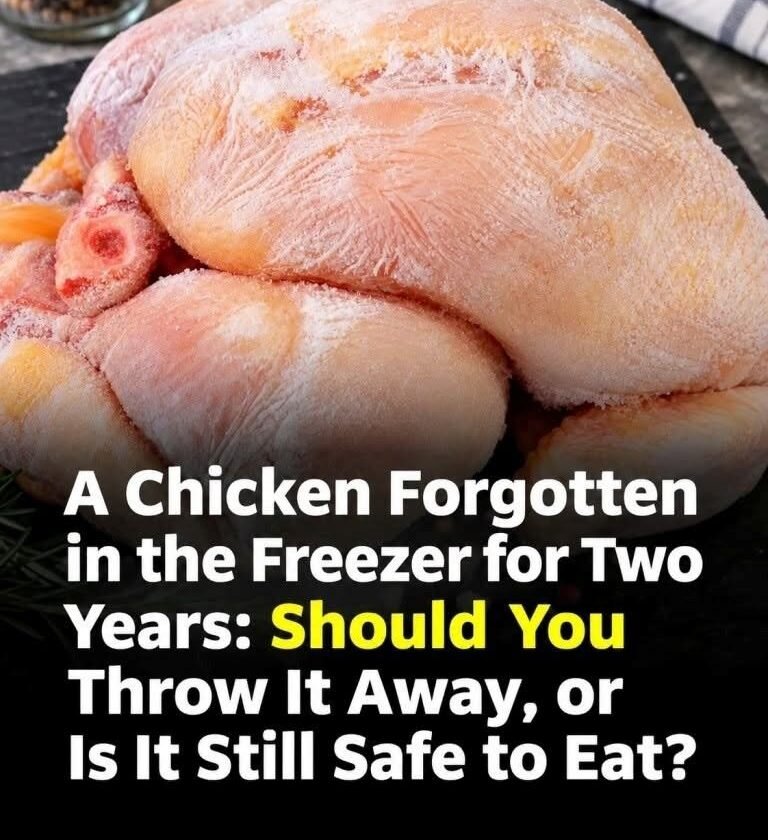
From a purely food-safety standpoint, chicken that has been frozen continuously for two years is technically safe to eat, provided it stayed frozen at or below 0°F (-18°C) the entire time. Freezing halts the growth of bacteria, yeasts, and molds, meaning pathogens that cause food poisoning cannot multiply in a deep freeze.
However, from a culinary and quality standpoint, it probably cannot be “saved” in terms of texture and flavor.
What Happens to 2-Year-Old Frozen Chicken?
Even though the meat is safe from bacteria, it undergoes significant physical degradation over that much time:
-
Severe Freezer Burn: Unless the chicken was vacuum-sealed in a commercial-grade package, air inevitably made contact with the surface of the meat over 24 months. Moisture sublimates out of the tissue, leaving behind dry, leathery, chalky-white patches.
-
Fat Oxidation (Rancidity): Chicken fat oxidizes very slowly even at sub-zero temperatures. After two years, those fats break down, giving the meat a stale, cardboard-like, or distinctly off-flavor when cooked.
-
Mashed-Potato Texture: The ice crystals that formed over months inside the muscle fibers ruptured the cell walls. When you finally thaw and cook it, the meat will likely be profoundly stringy, dry, and spongy.
How to Inspect It Before Deciding
If you pull it out of the freezer, let it thaw in the refrigerator and check for these signs:
-
The Smell Test: Once thawed, fresh chicken should have virtually no odor. If it smells sour, rancid, or noticeably “off,” throw it away immediately.
-
The Visual Test: Look for deep, dehydrated yellow or greyish-white patches (freezer burn). While you can trim off small freezer-burned spots with a knife before cooking, an entire two-year-old bird is usually compromised throughout.
-
The Texture Test: If the meat feels overly mushy or slimy after thawing, toss it.
The Verdict
If it passes the sniff and look test and you are determined not to waste food, you can trim away any heavily freezer-burned parts. To mask the dry, oxidized flavor, your best bet is to shred it and heavily season it in a long-simmering dish like a soup, stew, or enchilada filling with plenty of sauce and spices.
However, if it looks severely dehydrated or smells off, it’s best to toss it.