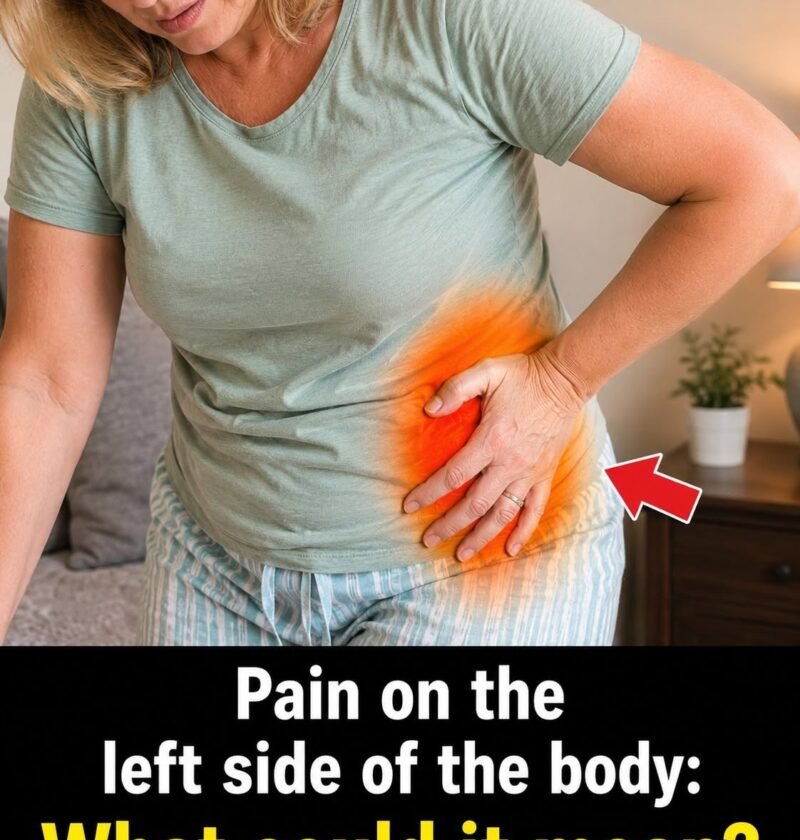
Viral health blogs and symptom-checker sites love to use broad, alarming headlines like “Left Side Body Pain: What It Could Mean and When to Pay Attention” to suggest that any ache on the left side of your body—from your shoulder down to your hip—is an immediate sign of a major medical emergency.
While left-sided chest pain naturally commands serious medical vigilance due to its proximity to the heart, pain occurring elsewhere on the left side of the body can stem from a wide variety of musculoskeletal, gastrointestinal, neurological, or localized anatomical causes.
Here is a breakdown of what left-side body pain actually points to, how location changes the meaning, and when you need urgent medical care.
Location Matters: Breaking Down Left-Side Pain
Because the left side of your body houses vital organs as well as a full mirror-image set of muscles, joints, and nerves, the exact location of the discomfort is your best clue:
-
Upper Left Chest, Arm, or Jaw:
-
What it can mean: This is the classic region of concern for cardiac events (like a myocardial infarction or angina), where pain or pressure can radiate down the left arm, up into the jaw, or across the shoulder blades. However, it can also stem from costochondritis (inflammation of the cartilage connecting your ribs to your breastbone), acid reflux (GERD), or pulled chest wall muscles.
-
-
Upper Left Abdomen or Ribcage:
-
What it can mean: This area houses your stomach and your spleen. Pain here can be caused by indigestion, gastritis, trapped gas, or occasionally a stressed or enlarged spleen (which sits just under the left ribcage).
-
-
Lower Left Abdomen (LLQ):
-
What it can mean: This is the classic location for issues related to the descending colon. The most common medical cause of localized pain here is diverticulitis (inflammation or infection of small pouches in the intestinal wall). It can also relate to gas, constipation, or gynecological sources in women (such as left-sided ovarian cysts).
-
-
Left Flank and Lower Back:
-
What it can mean: Pain wrapping around your mid-to-lower back on the left side often originates from your left kidney (such as a kidney stone or a urinary tract infection traveling upward, known as pyelonephritis) or from lumbar spine issues like a herniated disc pressing on a nerve.
-
Musculoskeletal vs. Visceral Pain
When evaluating left-side pain, doctors generally distinguish between two main types:
-
Musculoskeletal Pain: Aches in the muscles, ribs, or joints that typically change when you twist, press on the area, take a deep breath, or alter your posture. (e.g., a strained intercostal muscle between the ribs or a tight lower back).
-
Visceral Pain: Pain originating from internal organs. This type of pain tends to be deeper, harder to pinpoint with a single finger, and is often accompanied by autonomic symptoms like sweating, nausea, dizziness, or changes in digestion.
Red Flags: When Left-Side Pain Requires Emergency Care
While many aches on the left side are harmless muscular stiffness or mild digestive gripes, you should seek immediate emergency medical attention if left-sided pain (especially in the chest, upper back, or neck) is accompanied by any of the following red flags:
-
Crushing pressure, tightness, or a squeezing sensation in the chest, even if it comes and goes.
-
Pain radiating into your left arm, jaw, neck, or upper back.
-
Sudden shortness ofalgia, breath, lightheadedness, cold sweats, or sudden nausea.
-
Severe, knife-like abdominal or flank pain that makes it impossible to stand straight, especially if accompanied by high fever, chills, vomiting, or blood in your urine or stool.
If your pain is dull, chronic, or clearly linked to physical activity or posture without any emergency warning signs, schedule an appointment with your primary care physician to get a proper, targeted diagnosis!