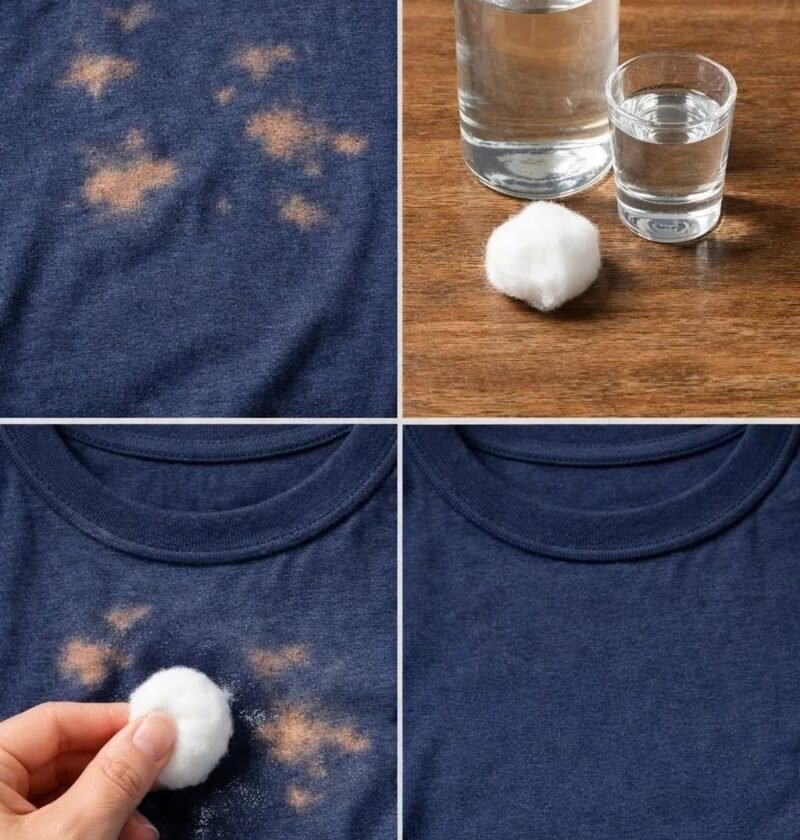
Viral DIY cleaning videos and “life hack” reels love to promise that you can magically reverse a bleach stain on your favorite dark shirt with a simple household trick, saving it from the trash.
When clothing textile experts and dry cleaners look at what bleach actually does to fabric, the reality is a bit more sobering: You cannot truly “fix” or “restore” a true bleach stain.
Here is why bleach stains are uniquely permanent, and what science and textile experts actually say about your options when bleach ruins a garment:
Why Bleach Stains Can’t Just Be “Washed Out”
Most everyday stains—like coffee, wine, or grass—happen when foreign substances add color pigment to your clothing. You can wash, bleach, or dissolve those pigments.
Bleach does the exact opposite. Sodium hypochlorite is a powerful oxidizing agent. When it touches colored fabric, it doesn’t just sit on top—it chemically destroys the dye molecules, permanently stripping away the color and leaving behind the raw, bleached-white or yellowish cellulose fibers underneath. Because the dye is chemically annihilated, no amount of regular washing, detergent, or stain remover can put that color back.
What You Can Do (The Realistic Solutions)
While you can’t magically reverse the chemical damage, you don’t necessarily have to throw the garment away, either. Depending on where the stain is and what kind of fabric it is, you have a few practical options:
1. Fabric Dyeing (For Solid-Colored Garments)
If the garment is a solid, natural fabric (like 100% cotton, linen, or denim), you can dye the entire piece.
-
The Catch: Synthetic threads (like polyester stitching used in seams) often do not absorb fabric dye. If your shirt is cotton with polyester thread, the shirt will dye a new color, but the stitching may remain the original color (or look speckled).
2. Textile Markers or Fabric Paint
If the bleach spot is small (like a tiny splash on a dark pair of jeans or a jacket), you can carefully dab it with a permanent fabric marker or textile paint that matches the garment’s exact color. It won’t be 100% invisible under close inspection, but from a distance, it can easily make the garment wearable again.
3. Strategic Upcycling or Embracing the “Distressed” Look
For casual clothes like hoodies, t-shirts, or denim, many people lean into the accident:
-
Tie-Dye / Reverse Tie-Dye: Splashing a bit more bleach strategically across the garment can create a trendy, intentional tie-dye or acid-wash pattern.
-
Embroidering / Patches: Sewing a small, stylish patch over the stain or covering it with simple embroidery turns a flaw into a custom design element.
The Bottom Line
If a viral video claims that rubbing lemon juice, vinegar, or dish soap onto a bleach-stained shirt will magically restore the original dye, it’s a trick—the stain usually just looks slightly altered while wet, only to reappear once dry.
When bleach hits your clothes, accept that the dye is gone for good, and decide whether the garment is worth dying, patching, or turning into your new “around-the-house” or gardening shirt.