Vitamin B12 is an essential nutrient that your body relies on to function properly. It plays a critical role in producing red blood cells, supporting nerve function, and synthesizing DNA. Because your body cannot manufacture B12 on its own, you must get it entirely from your diet (found primarily in animal products like meat, fish, eggs, and dairy) or supplements.
When your intake or absorption drops—whether due to dietary choices, age, or digestive issues—your body slowly runs low. Because B12 affects everything from your brain to your blood cells, a deficiency can manifest in surprising ways.
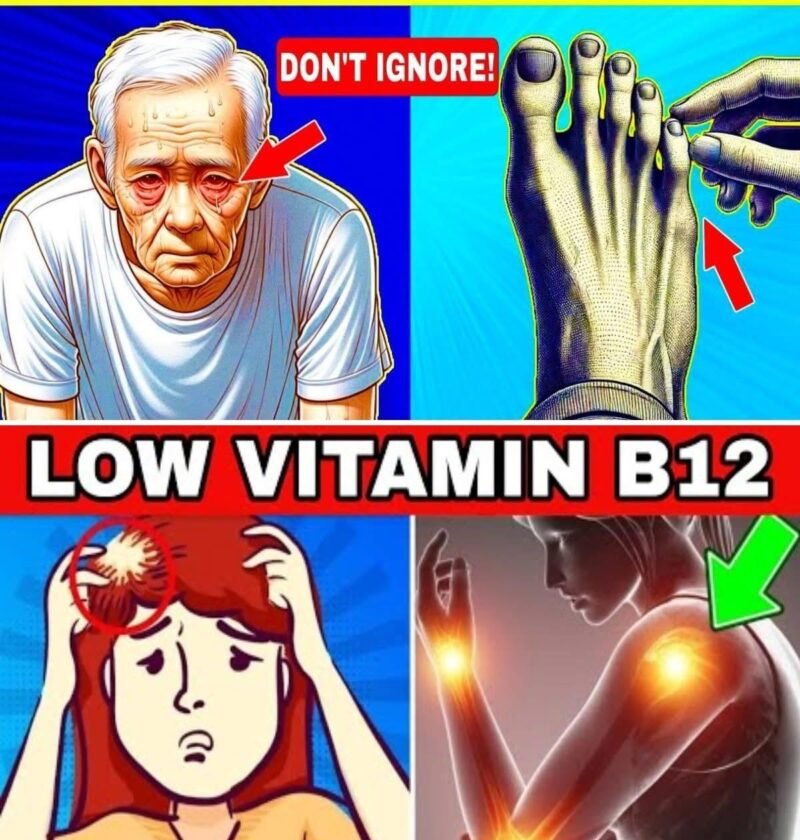
9 Hidden Signs Your Body Needs More Vitamin B12
While severe deficiency causes distinct medical issues, early or moderate shortages often present as subtle, nagging symptoms that are easy to brush off as everyday stress or aging:
-
Unexplained Fatigue and Weakness
-
The sign: Feeling bone-tired even after a full night’s sleep. Without enough B12, your body struggles to produce healthy red blood cells to carry oxygen throughout your tissues, leading to mild or moderate megaloblastic anemia and deep exhaustion.
-
-
Numbness, Tingling, or “Pins and Needles”
-
The sign: A prickly, static-like sensation in your fingers, hands, or feet. B12 is essential for maintaining the protective coating around your nerves (the myelin sheath). When B12 drops, nerve signaling can misfire, causing that strange tingling feeling.
-
-
Brain Fog and Memory Slips
-
The sign: Struggling to find words, forgetting why you walked into a room, or feeling mentally sluggish. Because B12 supports central nervous system health, a shortage can impact cognitive sharpness and concentration.
-
-
Pale or Jaundiced Skin Tone
-
The sign: Your skin looking slightly washed out or developing a faint yellowish tint. This happens because fragile, improperly formed red blood cells break down easily, releasing excess bilirubin into the body.
-
-
A Smooth, Sore, or Red Tongue (Glossitis)
-
The sign: Your tongue feeling tender, swollen, or unusually smooth as the tiny bumps (papillae) wear away. Many people with low B12 also experience mouth ulcers or a burning sensation along the edges of the tongue.
-
-
Dizziness or Lightheadedness
-
The sign: Feeling woozy when standing up too quickly or struggling with balance. This is closely tied to anemia and reduced oxygen delivery to your brain and inner ear.
-
-
Mood Changes, Irritability, or Low Spirits
-
The sign: Feeling unusually anxious, irritable, or down without a clear reason. B12 is deeply involved in synthesizing brain chemicals like serotonin and dopamine that regulate mood.
-
-
Muscle Weakness and Unsteady Gait
-
The sign: Feeling physically uncoordinated or noticing that your legs feel heavy and weak when walking. Advanced B12 deficiency can affect nerve pathways in the spinal cord, impacting balance and mobility.
-
-
Vision Changes
-
The sign: Blurry or disturbed vision in more severe, long-term deficiencies. This occurs when a lack of B12 damages the optic nerve, though it is one of the less common early symptoms.
-
Who Is Most at Risk for B12 Deficiency?
Certain factors make it harder to get or absorb enough vitamin B12:
-
Strict Vegan or Vegetarian Diets: Since natural B12 is found almost exclusively in animal products, plant-based eaters need fortified foods or supplements.
-
Adults Over 50: Stomach acid production naturally declines with age, making it harder to extract B12 from food.
-
Digestive Conditions: Conditions like celiac disease, Crohn’s disease, or even long-term use of acid-reflux medications (like PPIs) can impair B12 absorption in the gut.
When to See a Doctor
If you suspect you might be running low on B12, avoid self-prescribing massive, unmonitored megadoses. The safest first step is to consult your primary care doctor, who can run a simple blood test to check your serum B12 and folate levels and recommend the right dietary adjustments or supplements if needed.