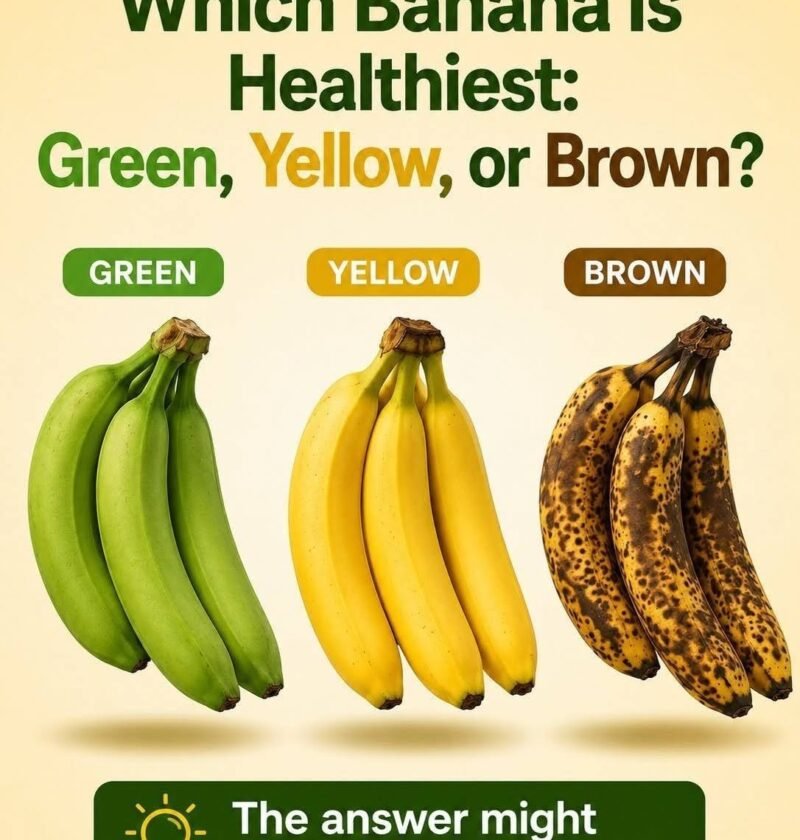
When it comes to bananas, the age-old debate over which color is “healthiest” really comes down to what your body needs at that moment. As a banana ripens, its internal chemistry transforms dramatically, shifting its flavor, texture, and how your digestive system processes it.
No single color is universally “best”—instead, each stage of ripeness offers distinct nutritional advantages. Here is how they compare:
1. Green Bananas (The Unripe Stage)
-
What’s happening inside: Green bananas are firm, starchy, and less sweet because their natural sugars have not yet developed.
-
Key Nutritional Benefits:
-
High Resistant Starch: Green bananas are packed with resistant starch, a type of prebiotic fiber that resists digestion in the small intestine. Instead, it reaches the colon, where it feeds your beneficial gut bacteria.
-
Lower Glycemic Index (GI): Because the starch takes longer to break down, green bananas cause a much slower, more gradual rise in blood sugar, making them an excellent choice for individuals managing prediabetes or type 2 diabetes.
-
-
The Downside: They can be tough to digest, frequently causing gas, bloating, or stomach discomfort for people with sensitive digestive tracts or IBS.
2. Yellow Bananas (The Peak Ripeness Stage)
-
What’s happening inside: The starch has largely converted into simple sugars (fructose, glucose, and sucrose), making the fruit sweet, soft, and easy to eat.
-
Key Nutritional Benefits:
-
Easier Digestion: Yellow bananas are much gentler on the stomach, making them ideal for a quick pre-workout energy boost or for soothing an unsettled digestive system.
-
Higher Antioxidant Levels: As the peel turns yellow and develops small brown spots, its antioxidant content increases, helping to neutralize free radicals and cellular stress.
-
-
The Downside: They have a higher glycemic index than green bananas, meaning they enter the bloodstream faster and can cause a quicker spike in blood sugar.
3. Brown-Spotted / Overripe Bananas (The Sweet Stage)
-
What’s happening inside: Heavily speckled or brown bananas are very soft and intensely sweet because almost all of the remaining complex starches have broken down into simple sugars.
-
Key Nutritional Benefits:
-
Rapid Energy Absorption: They are exceptionally easy to break down, making them a favorite for athletes needing instant fuel during endurance activities or for older adults with poor appetites who need quick, easily assimilated calories.
-
Peak Immune-Boosting Antioxidants: Research shows that heavily spotted bananas contain the highest concentrations of tumor necrosis factor (TNF) and antioxidants, which help support immune cell activity.
-
-
The Downside: They have the highest sugar concentration and lowest resistant starch content, causing the sharpest blood sugar spike, which can lead to a quick crash afterward.
The Verdict: Which One Should You Choose?
-
Choose green or slightly yellow-green bananas if you want to support gut microbiome health, maintain steady blood sugar levels, or manage your weight by staying full longer.
-
Choose bright yellow bananas if you want a balanced snack, easy digestion, and a quick source of clean energy.
-
Choose brown-spotted bananas if you have a sensitive stomach, need quick-digesting energy, or are baking nutrient-dense banana bread.