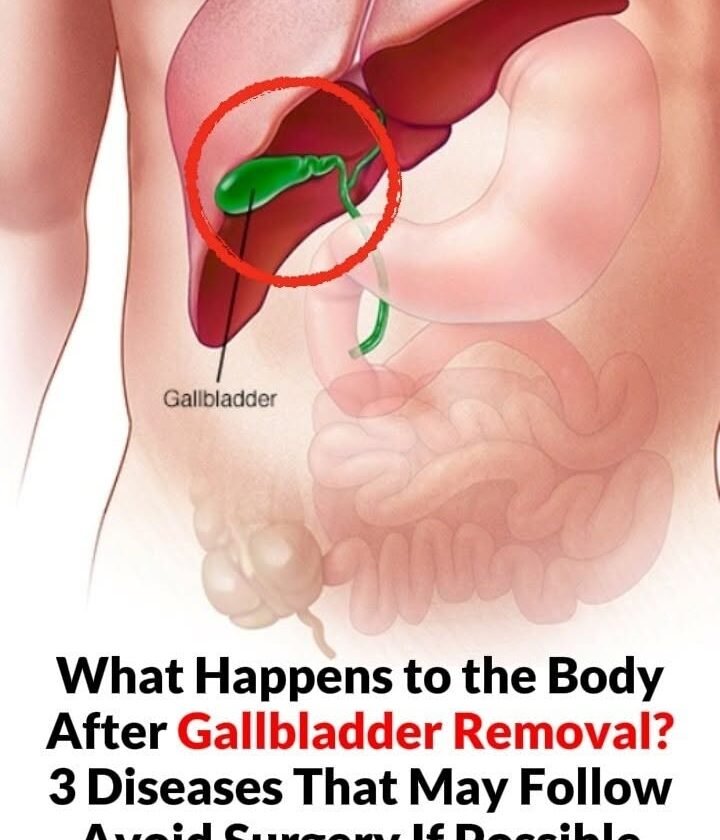
If you’re asking whether “After gallbladder removal, you could develop three conditions, so you should avoid surgery whenever possible” is medically accurate, the short answer is no—it’s too broad and potentially misleading.
After a cholecystectomy, some people can develop or experience:
- Bile-acid diarrhea — bile flows continuously into the intestine rather than being stored in the gallbladder. It can cause loose or frequent stools and is usually treatable. Imperial College Healthcare NHS Trust+1
- Post-cholecystectomy symptoms — abdominal discomfort, indigestion, bloating, reflux, nausea or diarrhea can persist in some people. Sometimes another gastrointestinal problem was responsible for the original symptoms. nhs.uk+1
- Surgical complications — uncommon but potentially serious problems include bile leakage, bile-duct injury, infection, bleeding, retained bile-duct stones, and blood clots. nhs.uk
Should you avoid gallbladder removal?
Not automatically. For people with symptomatic gallstones, acute cholecystitis, biliary complications, or certain other gallbladder disorders, laparoscopic gallbladder removal is an established treatment and is generally considered safe. SAGE Publications+1
On the other hand, gallstones that cause no symptoms often don’t require surgery. nhs.uk
So the better principle is: don’t have the surgery unnecessarily—but don’t avoid a medically indicated cholecystectomy out of fear of these complications. The decision depends heavily on why surgery has been recommended in the first place.
If you tell me what your ultrasound/scan showed and why your doctor recommended gallbladder removal, I can explain whether surgery is usually recommended in that particular situation.
Sources