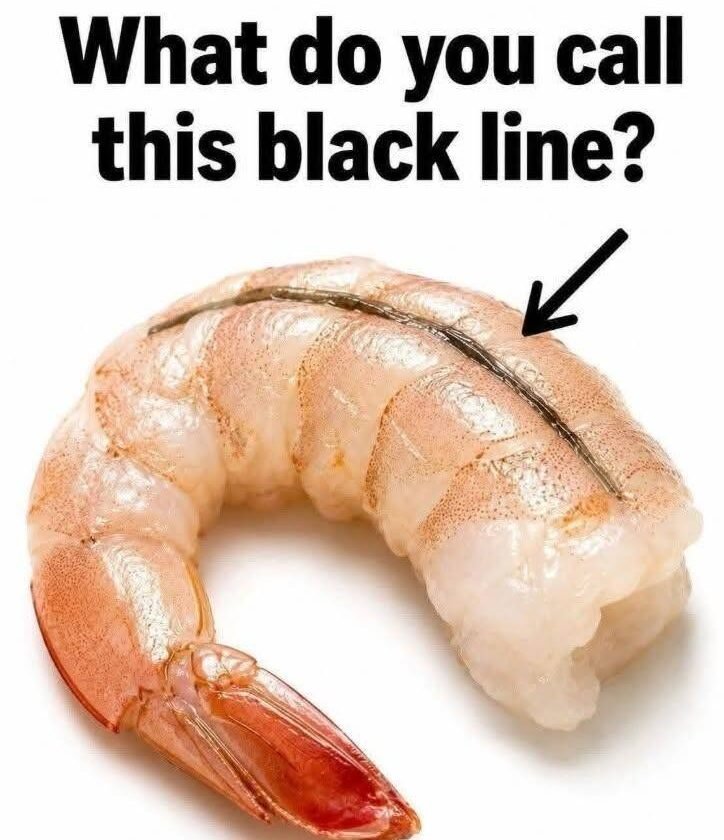
That prominent dark line running along the outer curve of a shrimp’s back is one of the most widely misunderstood parts of seafood preparation.
The short answer—and the part that surprises many people—is that the black line is the shrimp’s digestive tract (its intestine), meaning it contains sand, grit, and undigested food waste. In plain terms, it is essentially shrimp waste.
Is It Dangerous to Eat?
No, it is generally not a health hazard. As long as the shrimp is thoroughly cooked, eating the digestive tract will not make you sick. Millions of people eat shrimp with the vein intact every day around the world without issue.
However, leaving it in can affect the experience in a couple of ways:
-
Taste and Texture: Because the tract can contain sand, fine silt, or dirt from the seabed, it can sometimes add a gritty, muddy, or slightly bitter flavor to an otherwise delicate bite.
-
Appearance: Many people simply find it unappealing from an aesthetic standpoint, which is why removing it—a process known as deveining—is standard practice in many culinary traditions.
What About the Other Line? (The Bottom Line)
If you’ve ever cleaned a shrimp and noticed a second, thinner line running along the underside (belly) of the shrimp, you don’t need to worry about that one. That is the shrimp’s ventral nerve cord (akin to a spinal cord), not its digestive tract. It is entirely clean, doesn’t affect the taste, and is almost always left alone.
The Verdict: To Devein or Not to Devein?
-
On large shrimp or prawns: It is usually best to remove the top black line. Because the tract is larger, it’s more likely to taste gritty, and pulling it out makes for a much cleaner presentation.
-
On small or medium shrimp: The tract is often so tiny that it contains very little grit and is barely noticeable, making deveining mostly optional unless you prefer a pristine look.