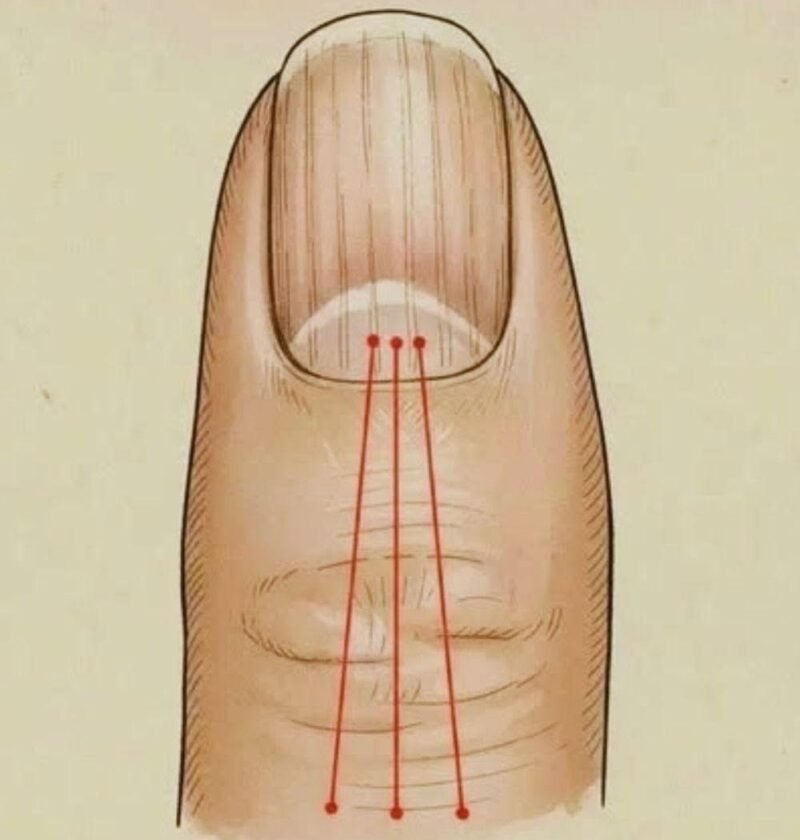
The headline “If you have lines on your nails, it means you have…” is a classic clickbait teaser designed to trigger immediate health anxiety, usually leading you to fear a severe or obscure systemic disease.
In medical reality, lines or ridges on your fingernails are extremely common. However, what they actually mean depends entirely on the direction the lines run.
Vertical Ridges (Running from Cuticle to Tip)
If you notice fine, vertical lines running up and down your fingernails, the cause is usually benign and straightforward:
-
Normal Aging: This is the most frequent cause. Just as our skin develops fine lines over time, the rate at which nail cells turn over slows down as we age, making vertical ridges a very common, harmless part of getting older.
-
Dryness and Dehydration: Chronic dry skin, frequent hand-washing, or mild dehydration can cause the nail plate to texture and show vertical striations.
-
Nutritional Gaps: Occasionally, more pronounced vertical ridges can accompany iron-deficiency anemia or protein deficiencies.
Horizontal Ridges (Running Side-to-Side / Beau’s Lines)
If you notice deep grooves or dents running horizontally across your nail from left to right, these are medically known as Beau’s lines.
-
What they mean: They are a physical record that something temporarily paused your nail’s growth. Because nails grow slowly, a horizontal dent often appears weeks or months after the event occurred.
-
Common triggers: A severe viral illness (like a high fever, pneumonia, or COVID-19), intense physical or emotional shock, sudden nutritional stress, localized nail trauma (like slamming a finger), or certain medications like chemotherapy.
The Takeaway
Do not let sensationalized internet articles panic you into thinking a few faint nail lines spell immediate doom. Minor vertical lines are usually just a natural part of aging, while deep horizontal grooves are typically a backward look at an illness or stress your body has already survived and recovered from. However, if your nails change shape abruptly, become unusually brittle, or show concerning color changes (like dark streaks), it’s always wise to mention it to your doctor during a routine checkup.