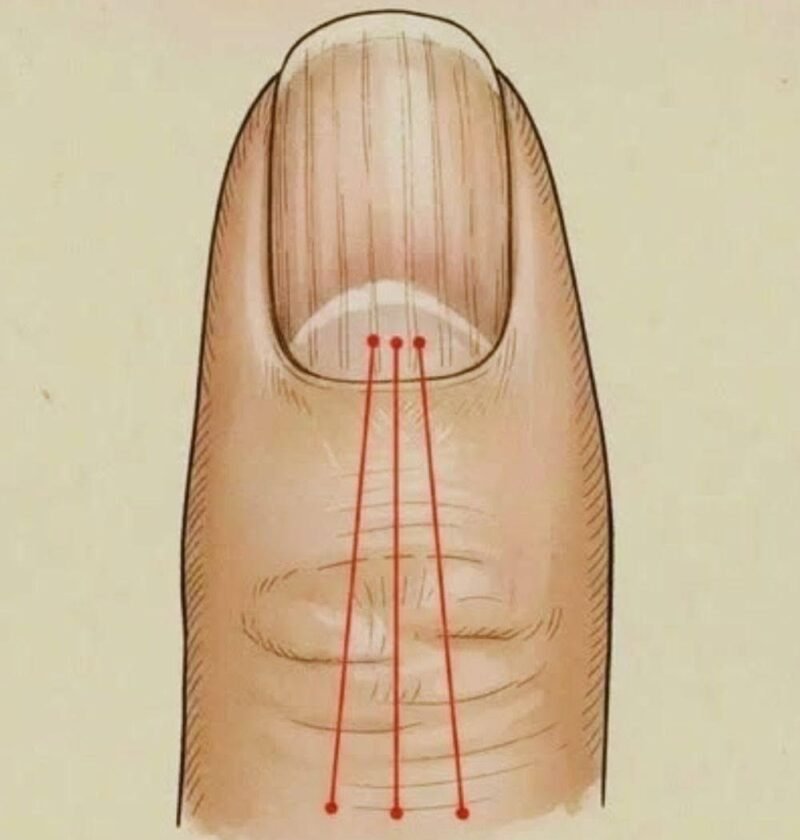
While sensational clickbait headlines love to tease scary diagnoses like “cancer” whenever you notice lines on your nails, the reality is far more common—and much less alarming.
Nail lines generally fall into two categories: vertical ridges and horizontal grooves. Understanding the difference can help you separate harmless aging changes from signs that warrant a closer look.
Vertical Ridges (Extremely Common and Harmless)
If you see small, parallel lines running vertically from your cuticle to the tip of your nail, you are looking at the most common type of nail line.
-
What Causes Them: Just like skin develops fine lines as we age, nails naturally form vertical ridges over time due to a slowing of cell turnover and minor changes in moisture retention.
-
When to Note Them: They are usually completely benign and a normal part of the aging process.
Horizontal Grooves or Discoloration (Beau’s Lines & Pigmentation)
Lines running horizontally (side-to-side) across the nail plate tell a different story because they indicate a temporary pause in nail growth.
-
Beau’s Lines: Deep horizontal indentations can occur when the body undergoes a significant stressor—such as a severe illness, high fever, major metabolic stress, or nutritional deficiency—that causes the nail matrix to temporarily stop growing. As the nail grows out, the groove moves up.
-
Dark Vertical Streaks: A brown or black vertical stripe beneath the nail plate (sometimes associated with frightening online claims) can occasionally be a harmless freckle under the nail (melanonychia), but any new or changing dark streak should always be evaluated by a dermatologist just to rule out rare pigment issues.
What to Keep in Mind
Most nail lines are simply harmless cosmetic variations or natural signs of aging. However, if you notice sudden deep grooves across multiple nails or persistent, unexplained pigment changes, a healthcare professional or dermatologist can examine them to give you peace of mind.