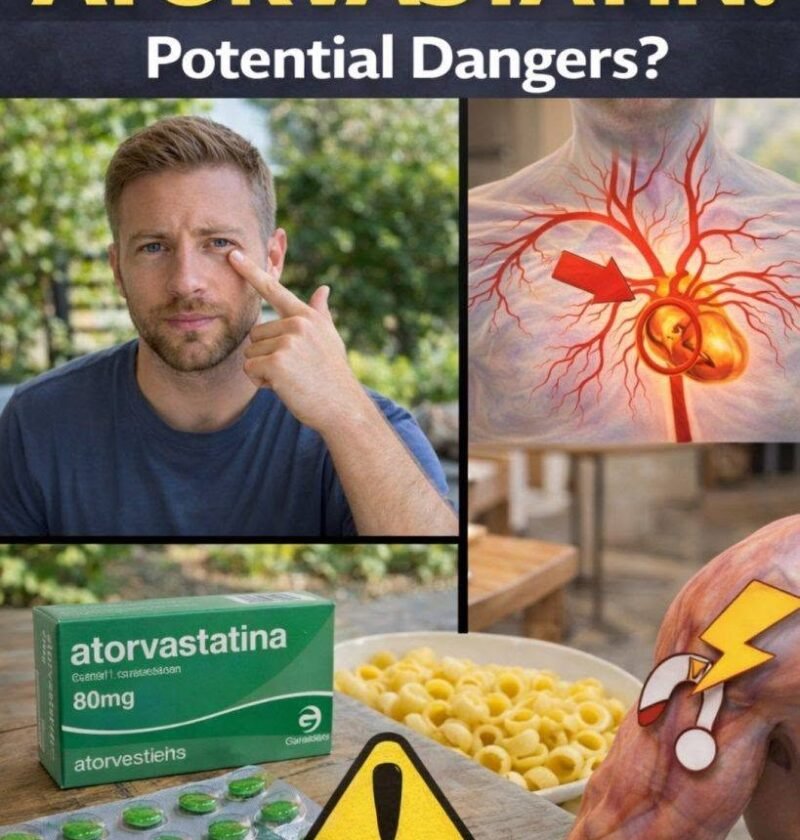
The headline “15 Hidden Dangers Your Doctor Might Not Tell You About” is sensationalized. Atorvastatin is a widely used statin that lowers LDL (“bad”) cholesterol and reduces the risk of heart attack and stroke. It can cause side effects, but serious complications are uncommon.
15 effects or concerns to know about
- Muscle aches or soreness — one of the more commonly reported problems.
- Muscle weakness or fatigue — should be discussed if persistent or unusual.
- Muscle cramps
- Headache
- Nausea or digestive upset
- Diarrhea or constipation
- Sleep disturbances — some people report changes in sleep, although the relationship isn’t always clear.
- Raised liver enzymes — usually detected on blood testing rather than by symptoms.
- Liver injury — rare, but possible.
- Increased blood glucose — statins can slightly increase blood sugar in some people.
- New-onset diabetes — there is a small increased risk, particularly in people already at higher risk for diabetes.
- Memory or concentration complaints — reported by some patients; when associated with statins, they are generally uncommon and often reversible after stopping.
- Allergic reactions — uncommon but potentially serious.
- Tendon problems — tendon pain or injury has been reported, although it is uncommon.
- Severe muscle breakdown (rhabdomyolysis) — very rare, but potentially dangerous because it can damage the kidneys.
🚨 Symptoms that need urgent attention
Seek medical help promptly if you’re taking atorvastatin and develop severe or unexplained muscle pain/weakness, particularly with dark or cola-colored urine, or signs of a serious allergic reaction such as facial/throat swelling or difficulty breathing.
Don’t stop atorvastatin on your own because of an internet article. The cardiovascular benefits can substantially outweigh the risks for people who have been appropriately prescribed a statin.
If you tell me your atorvastatin dose (10, 20, 40, or 80 mg), how long you’ve taken it, and any symptoms you’re experiencing, I can help you determine which side effects are plausible and what you should discuss with your doctor.