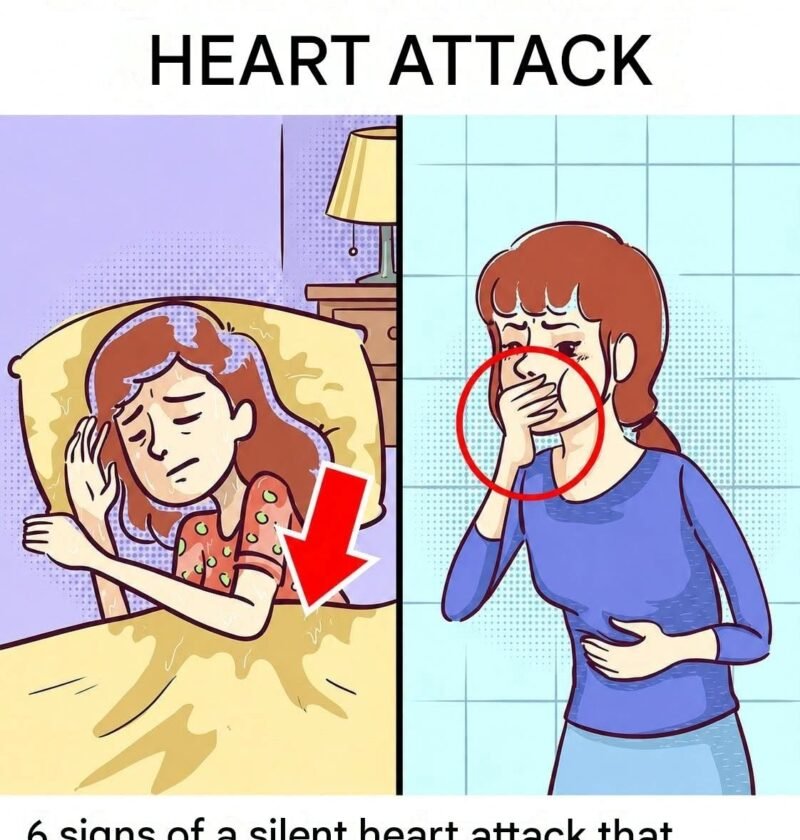
Unlike the dramatic, crushing chest pain often portrayed in movies, a silent heart attack (medically known as a silent myocardial infarction) produces symptoms that are so mild, atypical, or fleeting that people frequently mistake them for everyday discomfort, stress, or indigestion. In fact, a significant percentage of heart attacks are silent, meaning they occur without the person realizing it at the time, only to be discovered later during routine ECGs or scans.
Recognizing the subtle ways a heart attack can manifest is vital, as delayed treatment can still damage heart muscle.
6 Overlooked Signs of a Silent Heart Attack
-
1. Unusual or Overwhelming Fatigue: Feeling completely drained, exhausted, or suddenly unable to perform basic daily tasks (like climbing stairs or carrying groceries) for no apparent reason, especially if it comes on abruptly.
-
2. Vague Discomfort in the Upper Body: Instead of central chest pain, discomfort might feel like a mild ache, pressure, tightness, or squeezing in the jaw, neck, upper back, shoulders, or down one or both arms.
-
3. Unexplained Shortness of Breath: Catching your breath with minimal exertion—or even while resting—when you otherwise have normal lung function. This happens when the heart isn’t pumping efficiently enough to oxygenate the body.
-
4. Indigestion, Nausea, or Heartburn: Because the heart shares nerve pathways with the digestive tract, cardiac ischemia (lack of blood flow) can masquerade as a sour stomach, burping, mild nausea, or upper abdominal fullness.
-
5. Sudden Cold Sweats or Claminess: Breaking out in a cold sweat or feeling suddenly clammy and chilled without fever, anxiety, or physical exertion can be a classic autonomic nervous system response to cardiac distress.
-
6. Lightheadedness or Dizziness: A sudden wave of faintness, wooziness, or unsteadiness caused by a temporary drop in blood pressure when the heart fails to pump effectively.
Why Paying Attention Matters
Because these symptoms are easy to write off as stress, muscle strain, or a bad meal, people often delay seeking care. If you experience a combination of these unusual signs—particularly if you have cardiovascular risk factors like high blood pressure, diabetes, a family history of heart disease, or smoking history—it is always safer to seek immediate medical evaluation.