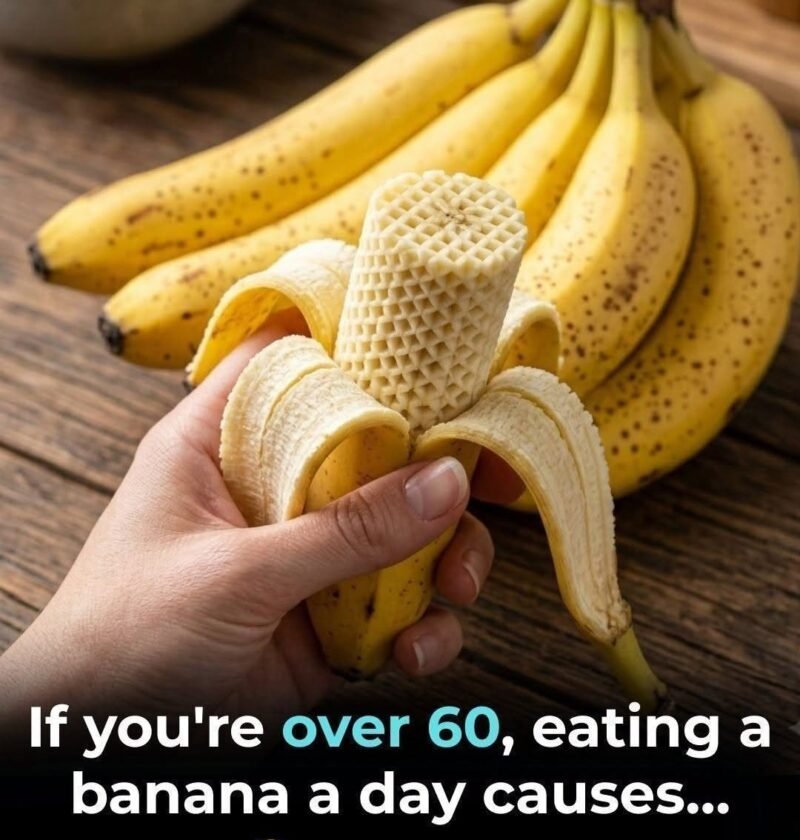
That cliffhanger—“If you’re over 60, eating a banana a day causes…”—is a masterclass in modern digital clickbait. It weaponizes two classic tactics: targeting a specific demographic (adults over 60) and weaponizing ambiguity to trigger a mild sense of panic or urgent curiosity, forcing you to click just to see if your favorite fruit is secretly harming you.
Internet health articles love to swing between extremes: either framing bananas as a dangerous sugar bomb for older adults or hyping them as an anti-aging elixir. The physiological reality, as always, sits in the sensible middle.
What Eating a Banana a Day Actually Causes in Your 60s and Beyond
For the vast majority of healthy older adults, eating a banana a day does not cause a medical crisis—it simply delivers a reliable dose of helpful micronutrients:
-
Better Blood Pressure Support: Bananas are famous for their potassium content. As we age, arterial walls naturally stiffen, and maintaining a healthy sodium-potassium balance is vital for keeping blood pressure in check. Potassium helps your body excrete excess sodium and relaxes blood vessel walls.
-
Gentle Digestive Fiber: Bananas provide soluble fiber (pectin), which supports healthy gut motility and feeds beneficial gut bacteria, helping ward off age-related digestive sluggishness.
-
Sustained Energy Without a Crash: They offer easily digestible carbohydrates paired with vitamin B6 and C, making them a great quick snack.
When Bananas Require Caution in Later Life
While daily bananas are generally fantastic, there are specific medical contexts where doctors or dietitians advise older adults to monitor their intake:
-
Medications That Raise Potassium (ACE Inhibitors / ARBs): Many adults over 60 take blood pressure medications like ACE inhibitors or potassium-sparing diuretics. These drugs reduce how much potassium your kidneys flush out. Piling high-potassium foods on top of this can theoretically lead to elevated blood potassium (hyperkalemia), though it usually takes more than one banana a day to trigger an issue unless kidney function is also compromised.
-
Kidney Health: As we age, kidney function naturally declines to some degree. Because filtering potassium is a primary job of the kidneys, individuals with advanced chronic kidney disease must carefully monitor their potassium intake.
-
Blood Sugar Management: A medium banana has about 14 grams of natural sugar and roughly 27 grams of carbohydrates. For older adults managing Type 2 diabetes or insulin resistance, eating a banana completely on an empty stomach can cause a blood sugar spike, though pairing it with a protein or healthy fat (like peanut butter or Greek yogurt) easily blunts that effect.
So, you aren’t walking into a hidden health trap by enjoying a daily banana—unless you have a specific kidney or medication restriction managed by your physician!