Another classic online teaser with a “read more” cutoff! While lifestyle blogs love to frame your preferred sleeping position as a dramatic health omen, the reality is much more nuanced.
Side sleeping is actually the most common sleeping position in the world. However, which side you sleep on—left or right—does interact with your anatomy in some fascinating physiological ways.
Here is what modern science and sleep medicine say actually happens when you consistently sleep on your right side:
1. The Acid Reflux (GERD) Difference
-
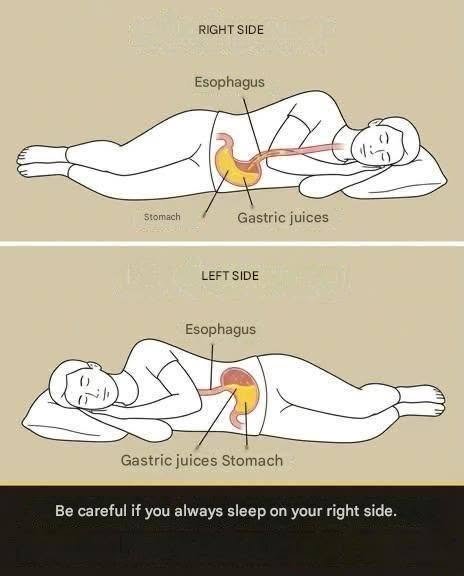
What happens: This is one of the most well-documented medical distinctions between the two sides. Your stomach sits on the left side of your abdomen, and its junction connecting to the esophagus sits slightly higher than the gastric acid pool.
-
The Catch: When you sleep on your right side, gravity causes stomach contents and gastric acid to wash up against the lower esophageal sphincter, significantly increasing the likelihood of nighttime acid reflux, heartburn, or indigestion. (Conversely, sleeping on your left side keeps the gastric junction above the acid level, making it the preferred position for chronic reflux sufferers).
2. Cardiovascular and Heart Comfort
-
What happens: For most healthy people, sleeping on the right side has a neutral or even comforting effect on the heart. Because the heart is positioned slightly toward the center-left of the chest, sleeping on the right side prevents the heart from shifting or feeling compressed by gravity against the chest wall, which some individuals with heart conditions find more comfortable.
3. Pregnancy and Circulation
-
What happens: During pregnancy, doctors strongly advise sleeping on the left side rather than the right. The left-side position keeps the growing uterus from pressing down on the inferior vena cava—the large vein running along the right side of your spine that returns blood from your lower body back to the heart. Avoiding right-side or back sleeping late in pregnancy prevents a drop in maternal blood pressure and ensures optimal blood flow to the baby.
4. Spinal Alignment and Shoulder Pressure
-
What happens: Mechanically, sleeping on either side puts concentrated pressure on a single shoulder joint and hip, which can lead to soreness or numbness if your mattress is too firm. Using a supportive pillow between your knees and ensuring your head pillow fills the gap between your mattress and ear helps keep your spine in a neutral line regardless of which side you favor.
The Bottom Line
If you wake up rested, pain-free, and without heartburn, sleeping on your right side is entirely safe and normal. However, if you struggle with frequent nighttime heartburn, acid reflux, or are pregnant, shifting over to your left side can offer immediate, natural relief.
Do you naturally gravitate toward sleeping on your side, or does acid reflux or shoulder stiffness ever wake you up at night?