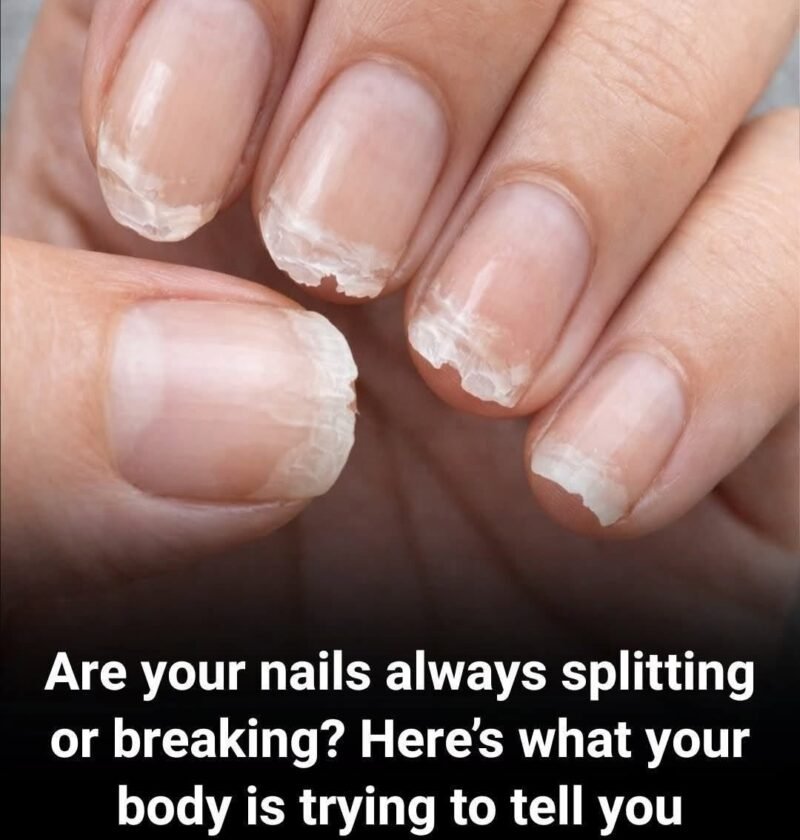
When your nails start peeling, splitting, breaking easily, or developing stubborn ridges, it is easy to view them as a purely cosmetic annoyance. However, because fingernails and toenails grow from living tissue supplied by a rich network of blood vessels, dermatologists and medical professionals often view them as a natural health dashboard reflecting what is happening inside your body.
Here is what weak or brittle nails are often trying to tell you about your overall health:
1. Nutritional Deficiencies (The Building Blocks)
-
Iron Deficiency (Anemia): If your nails become thin, brittle, or start curving upward like a spoon (a condition called koilonychia), it is a classic sign that your body is low on iron or ferritin, affecting how oxygen is delivered to your nail matrix.
-
Biotin (Vitamin B7) or Protein Shortages: Keratin is the tough fibrous protein that makes up your nails. A lack of adequate dietary protein or key B vitamins can starve your nail bed of the raw materials needed to build strong, thick plates.
-
Zinc and Calcium Lows: Zinc is essential for cell division and tissue growth (including nail growth). A deficiency often manifests as weak nails dotted with white spots or slow growth rates.
2. Chronic Dehydration
-
What It Means: Just like hair and skin, nails need moisture to maintain their flexibility. When you are chronically dehydrated, your nails lose their natural moisture content, turning dry, brittle, and prone to snapping or splitting at the edges like dry wood.
3. Thyroid Imbalances (Hypothyroidism)
-
What It Means: Your thyroid gland regulates your body’s metabolism, cell turnover, and hormone balance. An underactive thyroid (hypothyroidism) slows down circulation and cellular regeneration, frequently resulting in dry, brittle, slow-growing, and easily cracked nails.
4. Overexposure to Chemicals and Moisture (External Stressors)
-
What It Means: Sometimes the problem isn’t internal at all. Frequent hand-washing, constant exposure to harsh cleaning chemicals, prolonged dishwashing without gloves, or the repeated use of acetone-based nail polish removers strip away natural oils and protective barriers, leaving nails fragile and peeling.
5. Circulatory or Oxygenation Issues
-
What It Means: Poor peripheral blood circulation means your fingertips aren’t receiving an optimal supply of oxygen-rich blood and vital nutrients. This sluggish micro-circulation can weaken nail beds over time.
How to Strengthen Your Nails From the Inside Out & Outside In
-
Nourish Your Diet: Focus on lean proteins (eggs, fish, poultry), healthy fats, and iron- and zinc-rich foods like leafy greens, nuts, seeds, and beans.
-
Hydrate Consistently: Keep your fluid intake up to maintain moisture balance throughout your body’s tissues.
-
Protect Your Hands: Wear rubber gloves when doing household chores or washing dishes, and switch to acetone-free nail polish removers.
-
Moisturize Your Nail Beds: Apply a rich hand cream, cuticle oil, or vitamin E oil around your nail beds nightly to lock in surface moisture.
Medical Note: If brittle nails are accompanied by other symptoms—such as extreme fatigue, hair loss, unexplained weight changes, or extreme cold intolerance—it is worth consulting a physician for simple blood work to check your iron levels, thyroid function, or vitamin status.
Have you noticed your nails becoming brittle recently, or are you dealing with other symptoms like peeling or ridges?