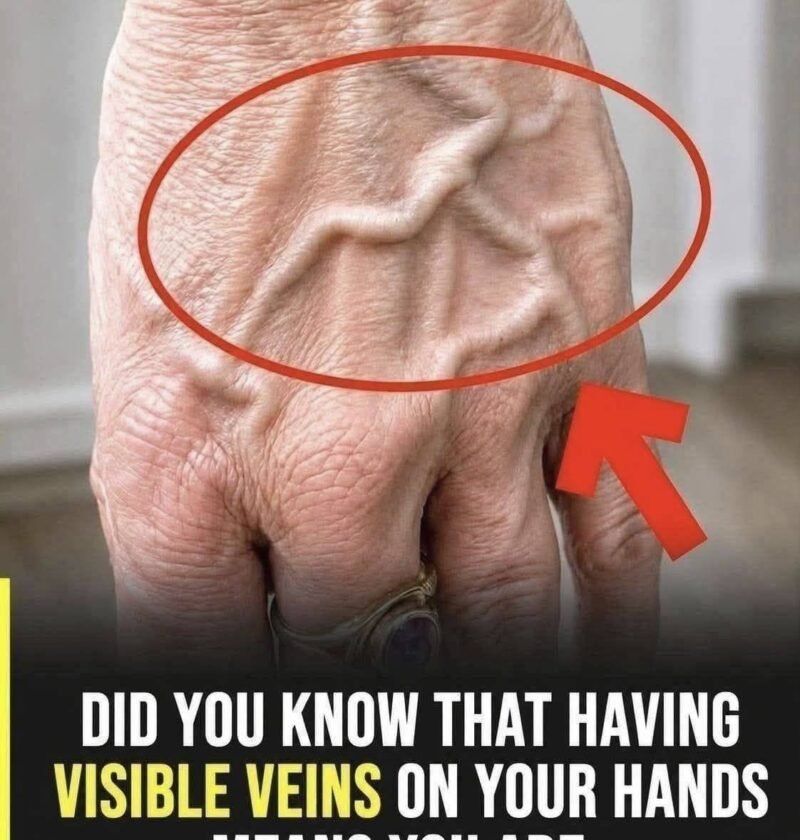
Titles like that are classic clickbait, designed to make you worry by linking a completely normal physical trait to a hidden medical threat.
In reality, having visible veins is usually harmless and rarely means something is wrong.
Why Are Veins Visible? (The Real Reasons)
Most of the time, prominent or visible veins are simply a result of normal biology, anatomy, or lifestyle factors:
-
Low Body Fat and Genetics: If you have a lean physique or thin skin by nature, your veins naturally sit closer to the surface.
-
Aging: As we get older, skin loses its elasticity and the thin layer of subcutaneous fat beneath it diminishes, making veins much easier to see (especially on the hands and arms).
-
Exercise and Heat: Working out temporarily increases your blood pressure and pushes blood closer to the surface. Similarly, hot weather causes your blood vessels to expand (vasodilate) to help cool your body down, making them more prominent.
-
Fair Skin Complexion: Lighter skin tones naturally allow the blue-green tint of surface veins to show through more clearly.
When to Actually Pay Attention
While everyday visible veins are normal, you should consult a doctor if you notice specific changes in your veins—particularly in your legs—such as:
-
Varicose Veins: Large, twisted, bulging veins that feel achy, heavy, or painful. This can indicate chronic venous insufficiency (weakened valves inside the veins allowing blood to pool).
-
Sudden Swelling, Pain, or Warmth: A vein that suddenly becomes hard, painful, tender, or red could signal superficial phlebitis or a blood clot (like deep vein thrombosis), which requires prompt medical evaluation.
Are your veins suddenly more noticeable, or were you just tracking down the source of one of those dramatic online headlines?