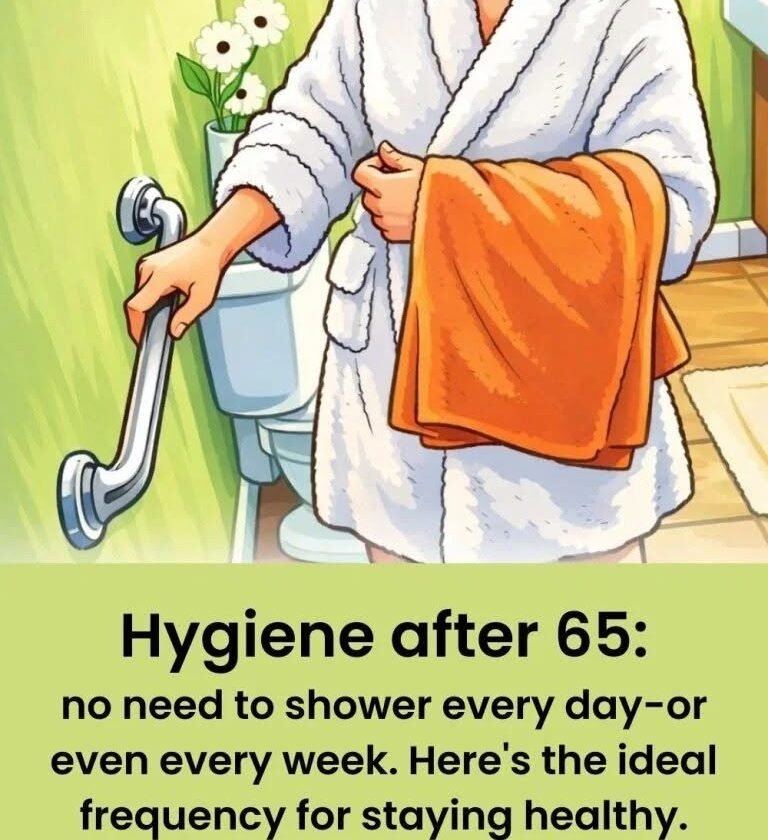
While a daily shower is a deeply ingrained habit for many, dermatologists and geriatric experts note that continuing this routine into later life—specifically after age 65—can frequently do more harm than good.
The shift isn’t about personal hygiene; rather, it is a biological response to how human skin changes over time.
Why Skin Changes After 65
As we age, our bodies undergo several physiological transformations that directly impact skin health:
-
Decreased Oil Production: Sebaceous (oil) glands slow down significantly after middle age. Skin produces far fewer natural lipids and sebum, which are essential for locking in moisture.
-
Thinner Skin Barrier: The outermost layer of the skin (the stratum corneum) becomes thinner and more fragile, weakening its ability to defend against external irritants and retain hydration.
-
Slower Cell Turnover: Older skin repairs itself and replaces lost moisture much slower than younger skin.
Why Daily Showers Cause Problems
When daily showers—especially long, hot ones paired with harsh soaps—meet aging skin, several issues can arise:
-
Severe Dryness and Itching (Xerosis): Hot water and heavy detergents act as powerful solvents, stripping away what little natural oil older skin manages to produce. This leads to tight, rough, intensely itchy skin.
-
Micro-Cracks and Infections: Severely dry skin can develop microscopic cracks. These tiny fissures compromise the skin barrier, creating entry points for bacteria and fungi that can lead to painful infections or dermatitis.
-
Exacerbation of Skin Conditions: Chronic over-washing can trigger or worsen conditions like eczema, winter itch, and general skin inflammation.
What Experts Recommend Instead
Dermatologists generally advise that most healthy adults over 65 do not need a full-body shower or bath every single day. Instead, a modified routine can maintain pristine hygiene while protecting fragile skin:
-
Adjust Frequency: Many older adults thrive taking a full shower or bath 2 to 3 times a week.
-
Targeted “Zone” Washing: On days without a full shower, practice targeted sink-washing of areas where sweat and bacteria naturally accumulate—specifically the armpits, groin, face, and feet.
-
Lower the Temperature: Swap steaming hot water for lukewarm water. Heat is the fastest way to strip essential moisture out of the skin.
-
Keep It Short: Limit showers to 5 to 10 minutes.
-
Switch Cleansers: Ditch harsh, heavily fragranced soaps. Opt instead for gentle, fragrance-free cleansers, syndet bars, or cleansing oils.
-
Moisturize Immediately: Apply a thick, fragrance-free cream or ointment within 3 minutes of stepping out of the shower while the skin is still slightly damp. This locks the residual water into the skin barrier.
Note: If you sweat heavily from physical activity, work, or a warm climate, a prompt rinse or shower is still entirely appropriate. The goal is not to abandon cleanliness, but to adapt your routine so it protects, rather than punishes, your skin.