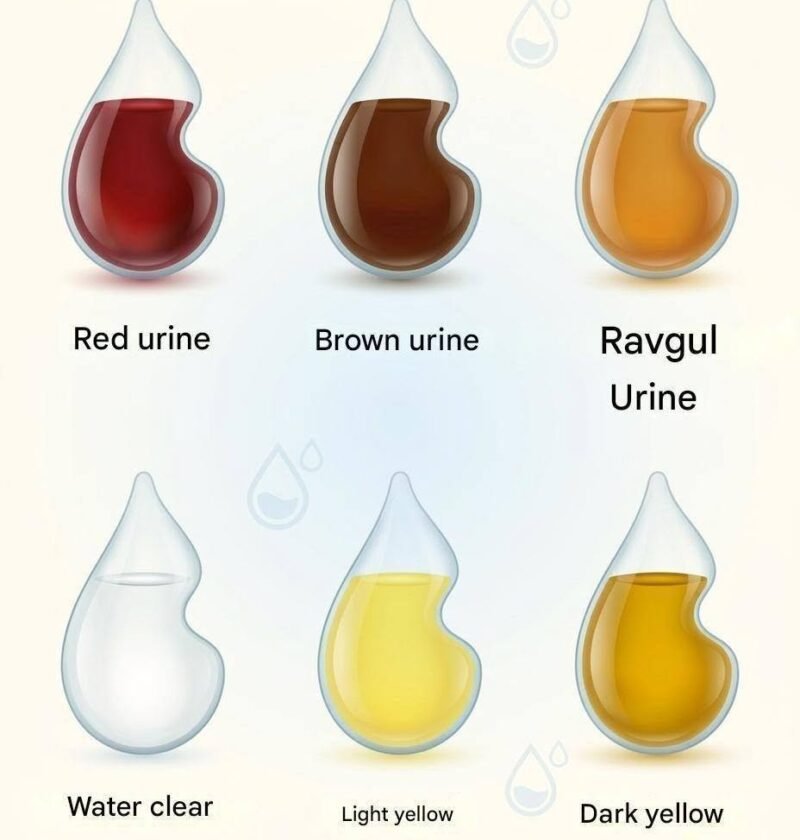
Urine color can give you clues about hydration and sometimes health, but color alone usually can’t diagnose a condition.
| Urine color | Common meaning |
|---|---|
| Pale yellow / straw | Usually well hydrated |
| Clear / almost colorless | Often means you’re drinking a lot of fluid; if consistently excessive, it may be worth discussing with a clinician |
| Dark yellow / amber | Often dehydration; drinking water should usually make it lighter |
| Orange | Can occur with dehydration or certain medicines/supplements; persistent orange urine should be checked |
| Pink / red | May be blood, but can also come from foods such as beets or certain medicines. Blood in urine warrants medical evaluation, especially if unexplained |
| Brown / cola-colored | Can occur with severe dehydration, liver/bile problems, muscle injury, or certain medications; seek medical advice promptly if it persists |
| Blue / green | Uncommon; can result from dyes, medications, or occasionally infection. Persistent unexplained discoloration should be evaluated |
| Cloudy / milky | Sometimes dehydration or crystals, but can also occur with a urinary infection or other urinary problems |
When to pay attention
Seek medical care if urine is red or brown without an obvious dietary/medication explanation, or if color changes come with pain or burning when urinating, fever, back/flank pain, jaundice, swelling, or significantly reduced urine output.
A useful rule of thumb: pale yellow is generally a reasonable hydration target—you don’t need your urine to be completely clear.