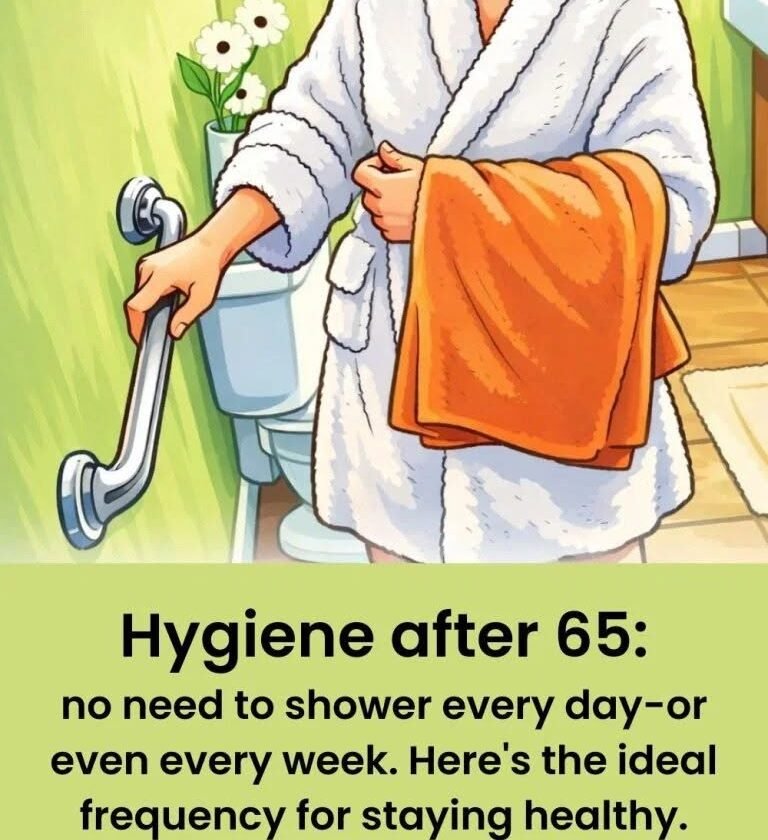
🚿 Why Daily Showers After 65 May Do More Harm Than Good
The claim is too broad. Turning 65 does not mean you should stop showering every day. The bigger concern is that hot water, long showers, and harsh soaps can dry and irritate aging skin.
What can happen?
As skin ages, it generally becomes thinner and produces less oil. Frequent exposure to very hot water and strong cleansers can strip away protective oils, potentially leading to:
- Dry, itchy skin
- Flaking and irritation
- Cracking or increased sensitivity
- Worsening of some skin conditions
Long, hot showers can also leave the bathroom slippery, increasing the risk of falls, which is particularly important for older adults.
If you shower every day
You don’t necessarily need to change the frequency. Instead:
- Use warm rather than hot water.
- Keep showers relatively short.
- Use a gentle, fragrance-free cleanser, particularly on areas that need it.
- Avoid vigorous scrubbing.
- Pat your skin dry rather than rubbing it.
- Apply a fragrance-free moisturizer immediately afterward, while the skin is still slightly damp.
- Use appropriate non-slip measures in the bathroom.
If your skin is very dry, showering less frequently may be more comfortable, but hygiene needs vary from person to person.
🚨 When to see a doctor
Persistent itching, severe dryness, cracking, sores, or a new rash shouldn’t automatically be blamed on aging. Medications and medical conditions can also cause or worsen dry skin.
Bottom line: It’s not daily showering after 65 that’s inherently harmful. The key is avoiding excessively hot, prolonged showers and harsh products while protecting your skin’s moisture barrier.