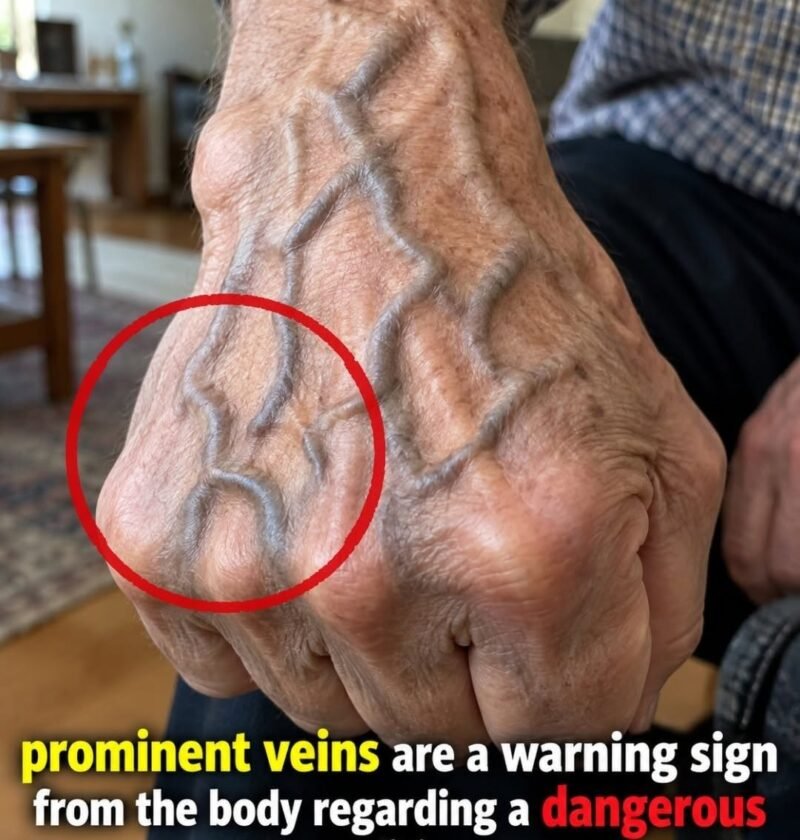
Prominent veins after 65: when should you pay attention?
Visible or bulging veins aren’t automatically a sign of a dangerous disease. As people age, skin becomes thinner and loses some of its underlying fat, making veins more noticeable. Exercise, genetics, heat, and dehydration can also make veins stand out.
However, new, enlarged, twisted, or painful veins can sometimes indicate a circulation problem.
-
Varicose veins: Enlarged, twisted veins—usually in the legs—can cause aching, heaviness, itching, or swelling.
-
Chronic venous insufficiency: Blood has difficulty returning from the legs to the heart, potentially causing persistent swelling, skin discoloration, or skin changes around the ankles.
-
A blood clot (DVT): More concerning when one leg suddenly becomes swollen, painful, warm, or red. This requires prompt medical evaluation.
-
Superficial thrombophlebitis: A vein close to the skin may become painful, hard, and red along its course.
🚨 Seek emergency care
If leg swelling or pain is accompanied by sudden shortness of breath, chest pain, coughing blood, fainting, or severe dizziness, seek emergency medical attention immediately because a clot can sometimes travel to the lungs.
So, prominent veins alone—especially in an otherwise healthy person—usually aren’t a warning sign of a dangerous condition. What matters is whether the veins are new and accompanied by swelling, pain, skin changes, or other symptoms.