What Is a Normal Blood Pressure at Each Age?
A common misconception is that blood pressure has a completely different “normal” range for every age. For adults, there isn’t a separate normal BP range for each decade. Blood pressure is interpreted using adult categories, while treatment goals may be individualized for older adults.
| Age | General reference |
|---|---|
| 18–39 | Around <120/80 mmHg |
| 40–59 | Around <120/80 mmHg |
| 60–69 | Around <120/80 mmHg |
| 70–79 | Around <120/80 mmHg, if tolerated |
| 80+ | No single age-specific target; health and frailty matter |
Adult blood-pressure categories
-
Normal: less than 120/80 mmHg
-
Elevated: 120–129 systolic and less than 80 diastolic
-
High blood pressure: persistent readings around 130/80 mmHg or higher, depending on the guideline used
-
Very high: 180/120 mmHg or higher requires prompt medical attention, particularly if symptoms are present.
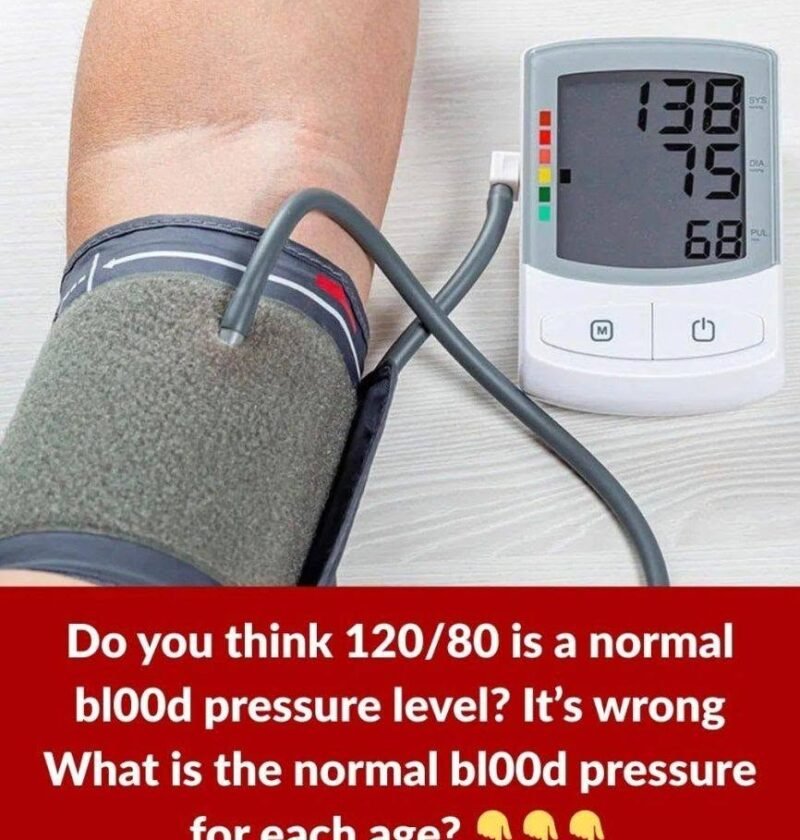
A single reading doesn’t establish hypertension. It’s better to take several readings while resting quietly for about 5 minutes, using a properly fitting cuff, and look at the pattern over time.
If you give me your age and your blood-pressure reading (for example, 65 years old — 150/90), I can explain what it means.