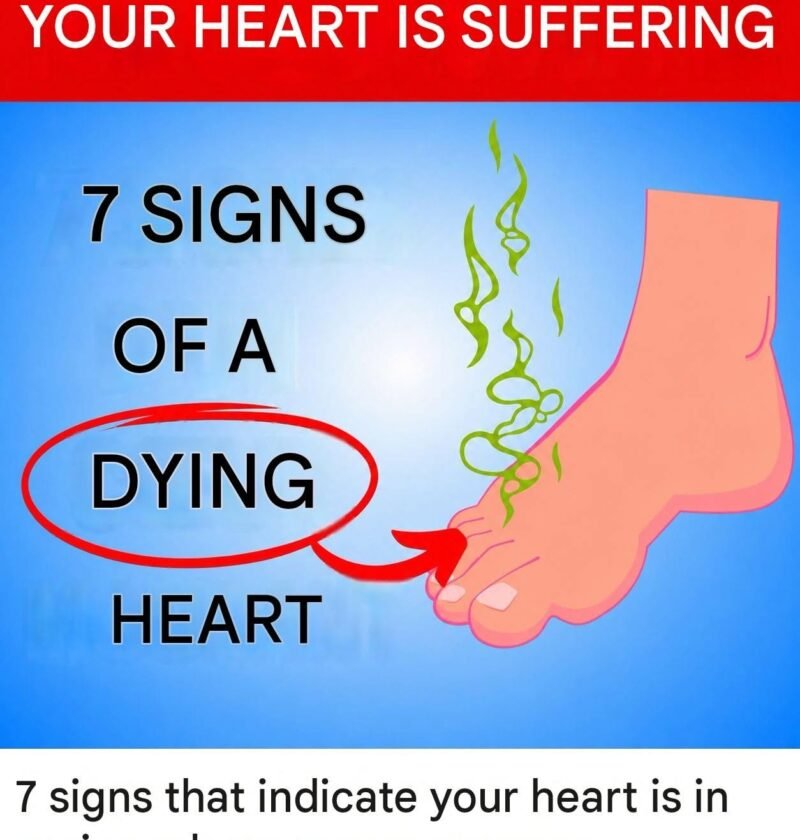
If you’re asking about the health meaning behind “7 signs that indicate your heart is in serious danger,” these are important warning symptoms—but none by itself proves that you have heart disease.
7 warning signs
- Chest pressure, squeezing, or pain
Especially if it lasts several minutes, keeps returning, or occurs with exertion. Pain can also spread to the arm, shoulder, back, neck, jaw, or upper abdomen. - Shortness of breath
Particularly when it is new, severe, occurs with minimal activity, or happens while resting or lying down. - Unexplained sweating, nausea, or vomiting
These can accompany a heart attack, sometimes even when chest pain is mild or absent. - Unusual or extreme fatigue
A sudden or unexplained drop in exercise tolerance can sometimes indicate a heart problem, although there are many other possible causes. - Dizziness, fainting, or near-fainting
This can occur when the heart isn’t pumping enough blood or because of an abnormal heart rhythm. - Rapid, pounding, or irregular heartbeat
Occasional palpitations are common, but persistent or severe palpitations—especially with chest pain, breathlessness, or fainting—need prompt evaluation. - Swelling in the legs, ankles, or feet
Persistent swelling accompanied by breathlessness or rapid weight gain can be a sign of fluid buildup associated with heart failure.
🚨 Don’t wait if these happen
If you have new chest pressure/pain, severe difficulty breathing, fainting, or symptoms suggesting a heart attack, seek emergency medical care immediately rather than trying to diagnose the cause yourself.
Also, heart disease can exist without obvious symptoms, so controlling blood pressure, cholesterol, diabetes, smoking, weight, and other risk factors is important even when you feel well.
If you want, I can also explain the 7 early signs of heart disease that people commonly ignore and how they differ from a heart attack.