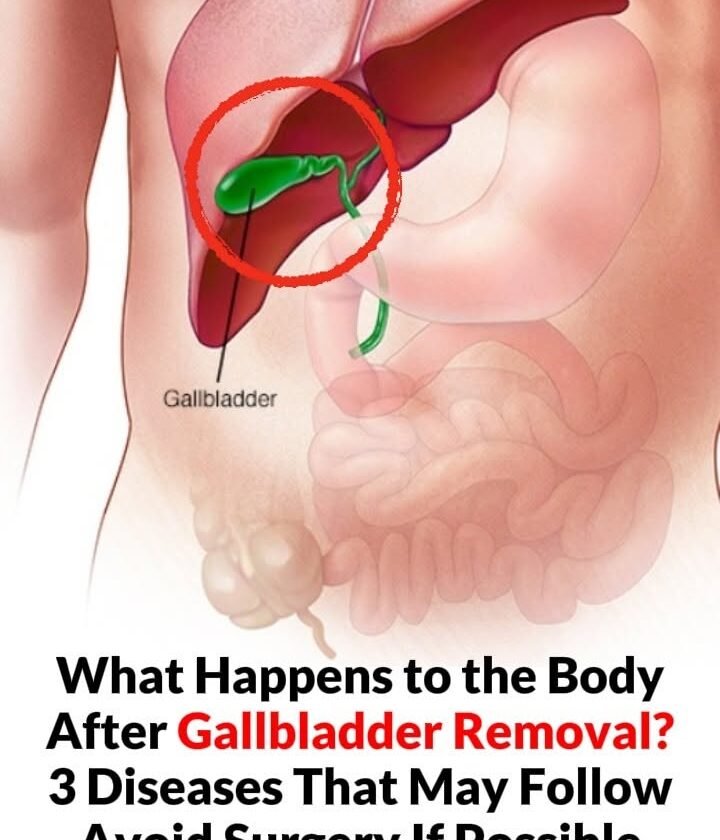
The headline “What Happens to the Body After Gallbladder Removal? 3 Diseases That May Follow – Avoid Surgery If Possible” is misleading. Gallbladder removal (cholecystectomy) is a common procedure, and most people can live normally without a gallbladder. The gallbladder stores bile, but the liver continues producing it after surgery. nhs.uk+1
What actually changes after surgery?
Without a gallbladder, bile flows from the liver into the intestine more continuously rather than being stored and released with meals. Most people adapt without major problems. Some develop temporary digestive changes such as bloating, indigestion or looser/more frequent stools. NIDDK+1
Three problems that can occur
- Diarrhea or bile-related bowel changes
Some people experience persistent or temporary diarrhea after surgery. Changes in bile flow are one possible reason. NIDDK+1 - Persistent abdominal or digestive symptoms
A minority develop what is sometimes called post-cholecystectomy syndrome, which can include abdominal pain, nausea, indigestion and diarrhea. Importantly, this doesn’t necessarily represent a new “disease,” and persistent symptoms should be investigated because other digestive conditions can be responsible. nhs.uk - Surgical complications
Rare but potentially serious complications include bile leakage, injury to the bile duct, infection, bleeding, blood clots, or a stone left in the bile duct. Bile-duct injury occurs in less than 1% of cholecystectomies according to NIDDK. NIDDK+1
Should you avoid gallbladder surgery?
Not automatically. If you have gallstones that cause no symptoms, surgery may not be necessary. But symptomatic gallstones, repeated attacks, inflammation, bile-duct obstruction, or gallstone pancreatitis can make removal the appropriate treatment. Untreated gallstones can themselves cause serious complications. nhs.uk+1
So the better message is: don’t avoid gallbladder surgery simply because of alarming claims about “three diseases.” The decision should depend on why surgery has been recommended and your individual risks and benefits.
If you tell me what your ultrasound/CT report says (especially the gallstone size, number, gallbladder-wall findings, and whether the bile duct is dilated), I can explain whether surgery is typically recommended and what alternatives may exist.
Sources