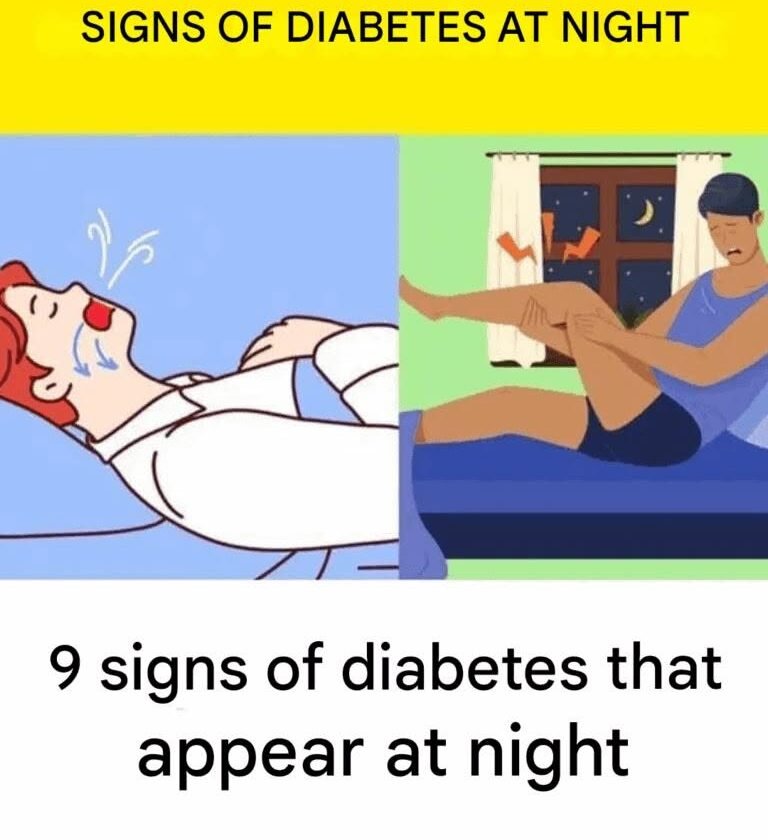
9 Signs of Diabetes That May Appear at Night
Diabetes doesn’t necessarily cause symptoms at night, and these signs aren’t diagnostic by themselves. But recurring nighttime symptoms can be a reason to check your blood glucose.
- Waking frequently to urinate — high blood glucose can cause the kidneys to excrete extra glucose and water.
- Intense thirst — often accompanies increased urination and fluid loss.
- Dry mouth — dehydration from frequent urination can contribute.
- Night sweats — importantly, sweating can occur with low blood sugar (hypoglycemia) as well as for many unrelated reasons.
- Shakiness or a racing heartbeat — particularly if you take insulin or certain diabetes medicines, these can signal nighttime hypoglycemia.
- Restless or interrupted sleep — repeated urination, thirst, or glucose fluctuations can interfere with sleep.
- Morning headaches — can sometimes accompany overnight glucose abnormalities or dehydration, but headaches have many other causes.
- Blurred vision — changes in blood glucose can temporarily affect the eye’s focusing ability.
- Marked tiredness the next morning — poor sleep and poorly controlled glucose can both contribute.
The important point
Symptoms can’t tell you reliably whether your blood sugar is high or low. A glucose measurement is much more useful.
If you repeatedly experience these symptoms, consider discussing fasting glucose and HbA1c testing with a healthcare professional.
🚨 If you have diabetes and develop vomiting, severe abdominal pain, rapid/deep breathing, confusion, extreme drowsiness, or very high blood glucose, seek urgent medical care. These can be signs of a serious hyperglycemic emergency.


