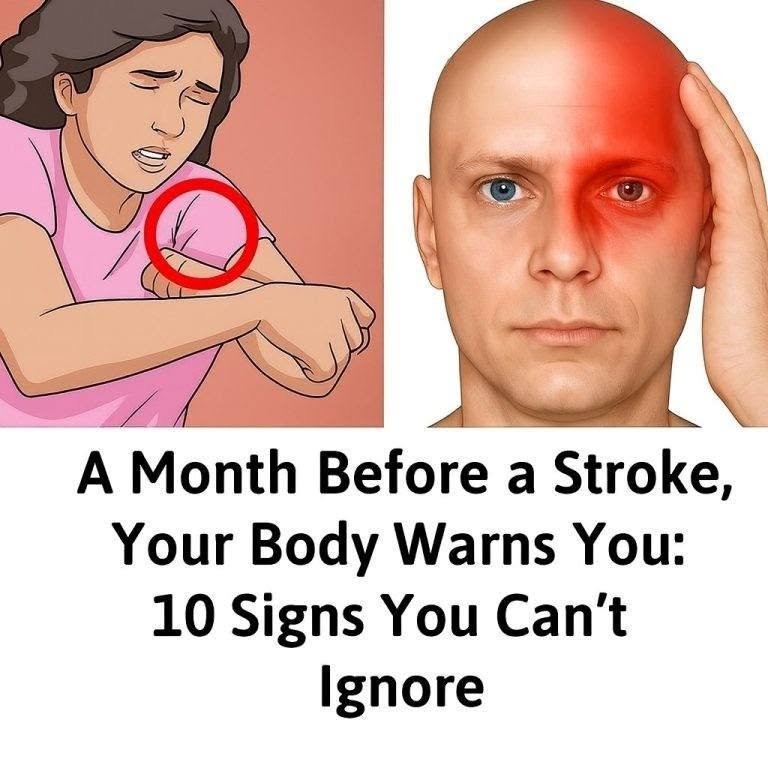
The headline “A month before a stroke, your body warns you” is misleading. There isn’t a reliable set of 10 symptoms that predict a stroke exactly one month in advance. However, some people experience a transient ischemic attack (TIA)—sometimes called a “mini-stroke”—before a major stroke. A TIA is an emergency warning and needs prompt medical assessment.
10 warning signs you should never ignore
Symptoms can appear suddenly and may include:
- Numbness or weakness of the face, arm or leg—especially on one side.
- A drooping or uneven face.
- Difficulty speaking or suddenly slurred/unclear speech.
- Difficulty understanding what someone is saying.
- Sudden vision loss or blurred/double vision, particularly in one eye.
- Sudden difficulty walking or loss of balance/coordination.
- Sudden severe dizziness without an obvious explanation.
- A sudden, severe headache unlike your usual headaches.
- Sudden confusion or difficulty thinking clearly.
- Sudden trouble performing a familiar task or coordinating movements.
A TIA can produce the same symptoms, but they may disappear after minutes or hours. Don’t wait for symptoms to resolve—a TIA can precede a major stroke, and urgent evaluation can help prevent one.
🚨 Think FAST
F — Face: Is one side drooping?
A — Arms: Can both arms be raised normally?
S — Speech: Is speech suddenly strange or slurred?
T — Time: Call your local emergency service immediately.
Don’t drive yourself to the hospital. Stroke treatment is time-sensitive, and some treatments work best when given very soon after symptoms begin.
If any of these symptoms are happening to you right now—even if they are improving or have disappeared—seek emergency medical care immediately.