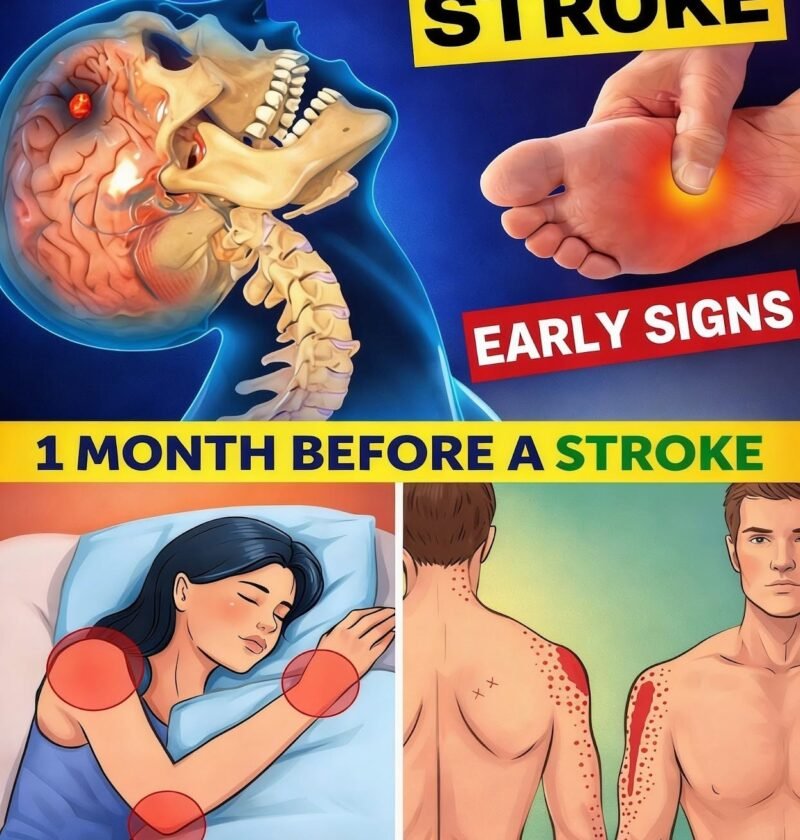
8 warning signs of stroke—and 9 ways to lower your risk
One important correction to the headline: there is no reliable list of symptoms that predict a major stroke weeks or months in advance. A stroke usually causes symptoms suddenly. A transient ischemic attack (TIA) can cause temporary stroke-like symptoms and is an important warning that requires urgent medical evaluation.
8 warning signs to recognize
- Sudden weakness or numbness
Especially in the face, arm or leg, particularly on one side. - Sudden facial drooping
One side of the face may sag or the smile may become uneven. - Sudden speech difficulty
Speech may become slurred, strange or difficult to produce. - Sudden trouble understanding
The person may have difficulty understanding what others are saying. - Sudden vision changes
Blurred, double or lost vision in one or both eyes can occur. - Sudden dizziness or loss of balance
Difficulty walking or coordinating movements can be a warning sign. - Sudden severe headache
Particularly a sudden, unusually severe headache without an obvious cause. - Sudden confusion or coordination problems
Abrupt changes in thinking, orientation or coordination should not be ignored.
These symptoms can occur with a stroke or TIA. Don’t wait for symptoms to become severe.
🚨 Remember FAST
- F — Face: Does one side droop?
- A — Arms: Is one arm weak or drifting downward?
- S — Speech: Is speech slurred or unusual?
- T — Time: Call emergency medical services immediately.
Even if symptoms disappear after a few minutes, urgent assessment is still necessary because it could have been a TIA.
9 ways to reduce your stroke risk
- Control high blood pressure. High blood pressure is one of the most important modifiable stroke risk factors.
- Don’t smoke. If you smoke, getting help to quit can substantially reduce cardiovascular risk.
- Manage diabetes and blood sugar. Follow your treatment plan and attend recommended checkups.
- Know your cholesterol levels. If your doctor prescribes a statin or another cholesterol-lowering medicine, take it as directed.
- Stay physically active. Regular moderate activity such as walking can contribute to cardiovascular health.
- Eat a heart-healthy diet. Emphasize vegetables, fruits, whole grains, legumes, nuts, fish and minimally processed foods while limiting excess sodium and highly processed foods.
- Maintain a healthy weight. Even modest improvements can help blood pressure and metabolic health.
- Limit alcohol. Heavy alcohol consumption can increase blood pressure and stroke risk.
- Take prescribed medicines consistently. Conditions such as atrial fibrillation, high blood pressure and high cholesterol may require medication to reduce stroke risk.
The most important takeaway
Don’t try to predict a stroke from vague symptoms. Focus on recognizing sudden neurological changes and controlling the risk factors you can change.
If someone suddenly develops facial drooping, one-sided weakness, speech difficulty, vision loss, severe dizziness or another sudden neurological symptom, seek emergency care immediately—even if they seem better a few minutes later.