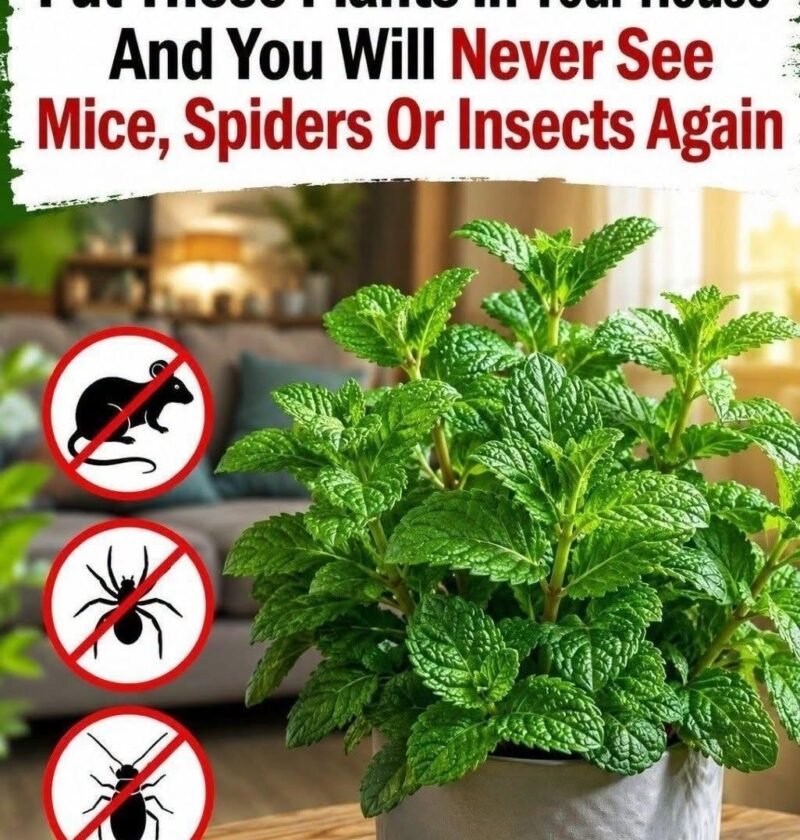
8 Plants That May Help Deter Mice, Spiders & Insects 🌿
Some strongly scented plants contain compounds that may discourage certain pests, but it’s important not to treat them as guaranteed pest control. A plant sitting in a pot usually won’t create a pest-proof barrier around your home.
Here are eight commonly used options:
-
Peppermint 🌱 — Its strong menthol scent may discourage some insects and rodents.
-
Lavender 💜 — Its fragrance can be unpleasant to some insects, including mosquitoes and moths.
-
Basil 🌿 — Its aromatic oils may help deter some flying insects.
-
Rosemary — Strong-smelling foliage can discourage certain insects.
-
Mint — Aromatic mint may repel or discourage some insects, although it can spread aggressively in gardens.
-
Marigolds 🌼 — Often planted around vegetables because their scent may deter some pests, although their pest-control effect varies.
-
Lemongrass — Contains citronellal and related compounds associated with insect-repellent activity.
-
Catnip — Contains nepetalactone, which has demonstrated insect-repellent properties in research.
🐭 What about mice?
Plants alone generally aren’t a dependable way to eliminate mice. If mice are entering your home, the most effective measures are sealing gaps and cracks, storing food securely, removing accessible food sources, and addressing nesting areas.
🕷️ And spiders?
Spiders usually enter homes because there is food (other insects), shelter, and suitable conditions. Reducing insects and sealing entry points is generally more effective than relying on aromatic plants.
Tip: If you’re growing mint or other vigorous plants, consider containers because some varieties can quickly take over garden beds.
Bottom line: These plants can add pleasant scents and may discourage some pests, but physical exclusion and good sanitation are much more reliable for controlling mice and household insects.