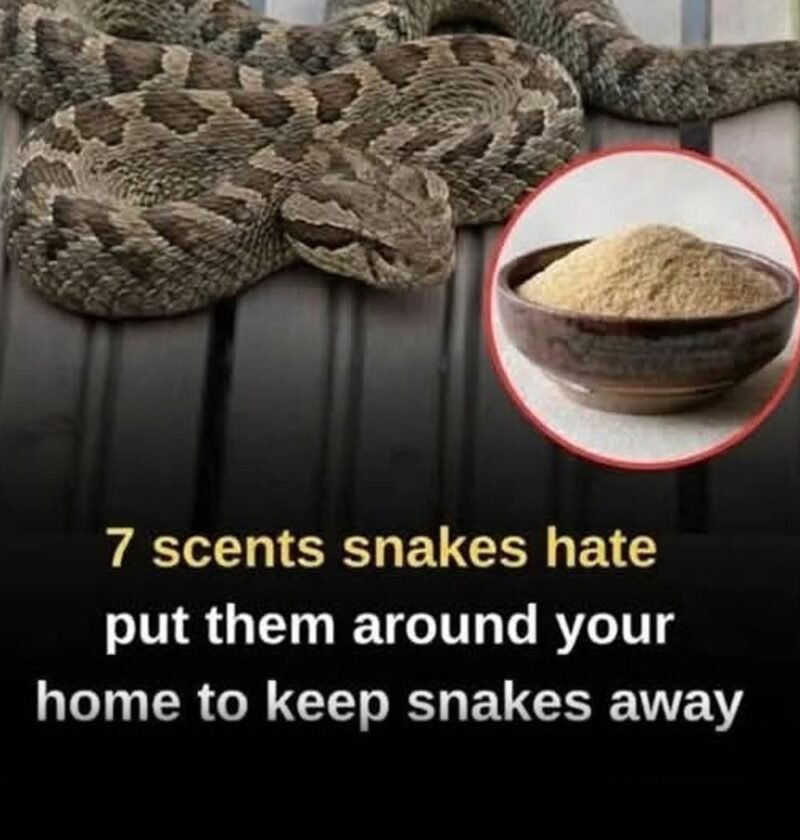
…and another classic pest-control clickbait title! If you live in an area where wildlife wanders near the yard, articles promising that a few pungent kitchen ingredients will create an impenetrable forcefield against snakes are awfully tempting.
While snakes do rely heavily on their sense of smell—using their tongues to pick up scent particles in the air—the idea that strong household odors act as foolproof snake repellents is largely exaggerated. Still, understanding how snakes interact with their environment can help explain why these particular smells are famous in folklore and garden lore.
The 7 “Snake-Hating” Smells and How People Use Them
-
Garlic and Onions
-
The Claim: The intense sulfur compounds overwhelm a snake’s sensory system.
-
How it’s used: People plant border rows of garlic or crush cloves around entry points.
-
The Reality: While very strong chemical concentrations can be unpleasant, a few cloves in the garden won’t stop a slithering visitor looking for shelter or mice.
-
-
Cinnamon Oil and Clove Oil
-
The Claim: Essential oils contain concentrated volatile compounds that irritate a snake’s delicate skin and nasal passages.
-
How it’s used: Mixed with water in spray bottles and misted around patios, foundations, and doorways.
-
The Reality: Pure essential oils can be strong enough to deter pests temporarily, but they evaporate quickly outdoors and wash away with the first sprinkler cycle or rain.
-
-
Snake Plant (Sansevieria)
-
The Claim: Its sharp leaves and strong scent keep snakes away.
-
How it’s used: Planted heavily around porches and garden beds.
-
The Reality: The leaves look cool and architectural, but snakes will happily slither right past or coil underneath them for shade.
-
-
Ammonia
-
The Claim: Mimics the scent of predator urine or chemical danger, terrifying snakes.
-
How it’s used: Rags soaked in ammonia are placed in bowls or around the perimeter of a crawlspace.
-
The Reality: The sharp chemical odor is genuinely foul to most animals, but its effectiveness outdoors is fleeting as it quickly dissipates into the air.
-
-
White Vinegar
-
The Claim: The acidity and sharp smell irritate their skin and sensory organs.
-
How it’s used: Poured around pool borders or property lines (though it can kill nearby grass!).
-
The Reality: Like ammonia, vinegar offers very brief deterrent value before drying out completely.
-
-
Marigolds
-
The Claim: Their distinct pungent aroma acts as a natural biological barrier.
-
How it’s used: Interplanted among vegetables and flowers.
-
The Reality: Marigolds are great for keeping certain insects away, but they do nothing to deter a cold-blooded reptile hunting for rodents.
-
-
Mothballs (Naphthalene or Paradichlorobenzene)
-
The Claim: The classic chemical trick to drive away snakes, mice, and other critters.
-
How it’s used: Scattered loosely around the yard or flower beds.
-
The Reality: This is actually dangerous. Mothballs are toxic pesticides. Using them outdoors poisons local soil and water runoff, harms pets and beneficial wildlife, and—to top it all off—mostly fails to deter snakes anyway.
-
What Actually Keeps Snakes Away?
If aromatic sprays and kitchen spices aren’t a reliable fix, how do you keep snakes from moving in? Pest control and wildlife experts emphasize habitat modification rather than scent barriers:
-
Eliminate Food Sources: Snakes don’t come for the smell of garlic; they come looking for mice, rats, and large insects. Keeping your yard clear of rodent magnets (like unsecured trash, birdseed spills, and heavy brush) is your best defense.
-
Remove Hiding Spots: Clear away tall grass, brush piles, wood stacks close to the house, and dense ground cover where snakes love to ambush prey and stay hidden.
-
Seal Entry Points: Check your foundation, crawlspace vents, and gaps under doors to ensure snakes can’t physically crawl into your home or garage looking for a warm place to nest.
Have you been spotting uninvited reptile visitors in your yard lately, or are you just looking for safe ways to wildlife-proof your garden?