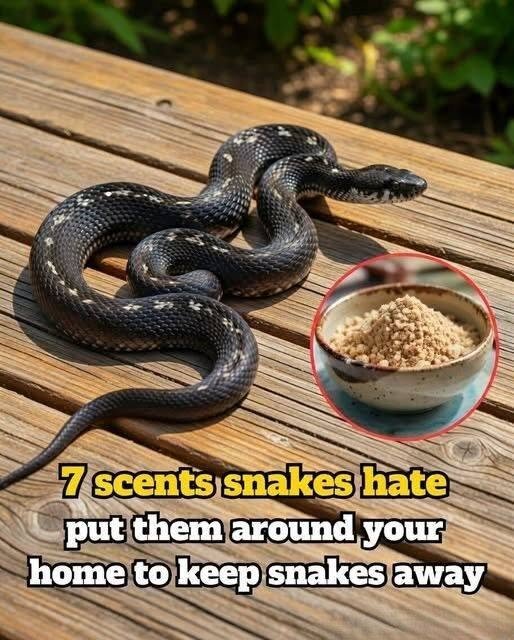
Snakes possess a unique sensory adaptation: while they have nostrils, they “smell” their environment primarily by flicking their tongue and collecting airborne particles, which they then transfer to an organ on the roof of their mouth (the Jacobson’s organ). Because they rely heavily on chemical cues to navigate, extremely intense or pungent odors can overwhelm their sensory system, making them uncomfortable.
Here are 7 common smells that snakes dislike, along with how (and how effectively) people attempt to use them around the home.
1. Cinnamon and Clove Oil
-
Why it works: The intense, spicy aromatic compounds in cinnamon and clove oils irritate a snake’s sensitive chemical receptors. Combined oil sprays are often cited as one of the more disruptive botanical scents for them.
-
How to use it: Mix a few drops of pure cinnamon essential oil and clove essential oil with water (adding a tiny drop of dish soap helps them blend) in a spray bottle. Spray it liberally around entry points, doorways, patio edges, and garden gaps.
2. Garlic and Onions
-
Why it works: Garlic and onions contain strong sulfur compounds (likeallicin) that release a heavy, pungent odor which snakes find deeply unappealing.
-
How to use it: You can crush fresh garlic cloves or chop up onions and scatter them around the perimeter of your yard or near potential hiding spots. Alternatively, boil crushed garlic in water, strain it, and spray the liquid barrier around your foundation.
3. Peppermint and Eucalyptus
-
Why it works: Minty, sharp fragrances are overpowering to a snake’s olfactory system. Bonus: these scents also deter common snake prey, like mice and insects.
-
How to use it: Plant peppermint or eucalyptus around the perimeter of your garden, or use high-concentration peppermint essential oil mixed with water. Spray it heavily around window wells, foundation cracks, and garage thresholds.
4. Lemongrass and Citrus
-
Why it works: Sharp, bright citrus notes—especially the heavy grassy-citrus aroma of lemongrass—are naturally offensive to a snake’s chemical sensing.
-
How to use it: Plant West Indian lemongrass in clusters or pots near your porch and outdoor seating areas. You can also scatter dried lemon or lime peels around your garden beds, or use lemongrass essential oil spray.
5. White Vinegar
-
Why it works: Vinegar is intensely acidic and pungent. Snakes dislike slithering over or near acidic substances because it irritates their skin and sensory organs.
-
How to use it: Pour or spray white vinegar directly around the perimeter of ponds, water features, garden borders, or stone retaining walls where snakes might look to hydrate or hunt.
6. Ammonia
-
Why it works: Ammonia mimics powerful chemical hazards and gives off a choking, sharp vapor that overwhelms a snake’s senses.
-
How to use it: Use with extreme caution. Typically, people soak rags in ammonia and place them in bowls or shallow containers near problem spots (like under a shed or crawlspace). Note: Ammonia is toxic, dangerous to breathe in high concentrations, will kill surrounding grass/plants, and should never be used indoors or where pets/children can reach it.
7. Naphthalene (Mothballs)
-
Why it works: Historically one of the most common DIY snake remedies, naphthalene emits a heavy chemical gas that disorients many small animals.
-
How to use it: People often scatter mothballs around garden beds or fence lines. However, pest control experts generally advise skipping mothballs entirely: they are toxic to humans and pets, can contaminate soil, are illegal to use outdoors in many areas, and are largely ineffective at stopping a motivated snake.
A Realistic Note on Scent Repellents
While strong smells can offer short-term spot deterrence, pest and wildlife experts emphasize that scents alone will not permanently keep snakes away.
-
The Limitations: Essential oils and DIY sprays evaporate quickly in the heat and wash away completely with the first rain.
-
The Root Cause: Snakes aren’t looking to lounge in the open; they go where they find food (rodents, insects, frogs) and shelter (tall grass, woodpiles, rock piles, debris, gaps under foundations).
The most effective way to keep snakes away long-term is habitat modification: keep your grass short, clear brush and wood piles away from your house foundation, and tackle any rodent issues you might have.