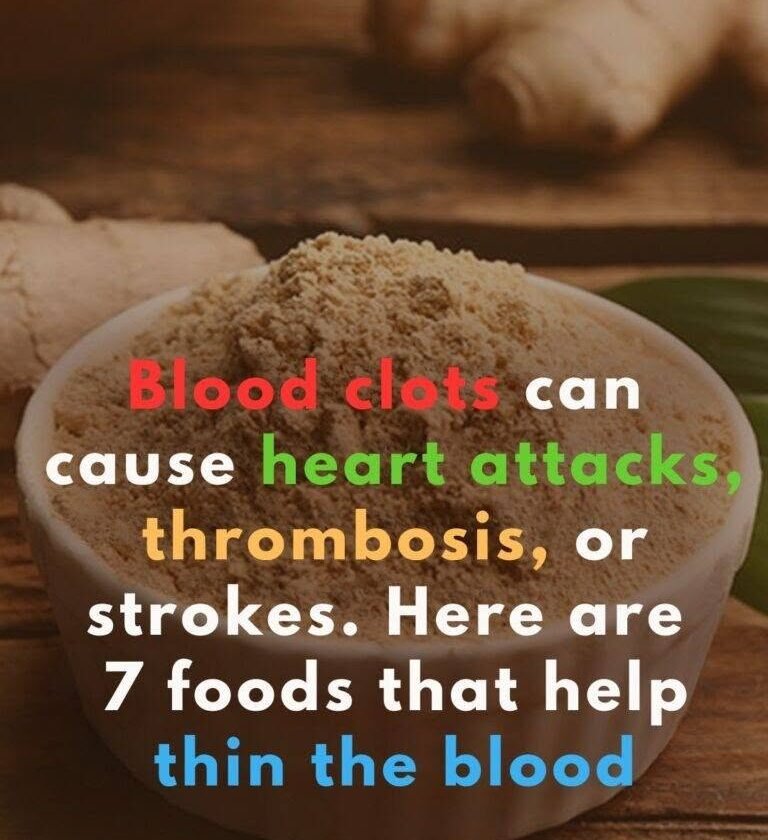
The phrase “blood-thinning foods” is a bit misleading. Foods don’t work like prescription anticoagulants, but some foods contain compounds that can influence platelet activity, clotting, or cardiovascular health.
7 foods commonly associated with blood-thinning effects
-
Garlic — contains sulfur compounds that may affect platelet aggregation.
-
Ginger — laboratory and limited human research suggests it may influence platelet activity.
-
Turmeric — curcumin has been studied for effects on platelet function and inflammation.
-
Fatty fish — salmon, sardines, and mackerel provide omega-3 fatty acids, which have effects on platelet function.
-
Green tea — contains polyphenols that may influence cardiovascular and clotting-related processes.
-
Cinnamon — contains compounds that have been investigated for effects on platelet aggregation, although evidence for a clinically meaningful blood-thinning effect is limited.
-
Dark leafy greens — spinach, kale, and similar vegetables are rich in vitamin K. They don’t thin the blood; in people taking warfarin, their vitamin-K content can affect anticoagulation.
Important safety point
If you take warfarin, apixaban, rivaroxaban, dabigatran, clopidogrel, aspirin, or another blood-thinning medication, don’t deliberately increase large amounts of these foods or supplements without discussing it with your healthcare professional. The biggest concern isn’t ordinary food consumption itself, but concentrated supplements and sudden dietary changes.
And don’t replace prescribed anticoagulants with foods—diet cannot reliably provide the same anticoagulant effect as medication.